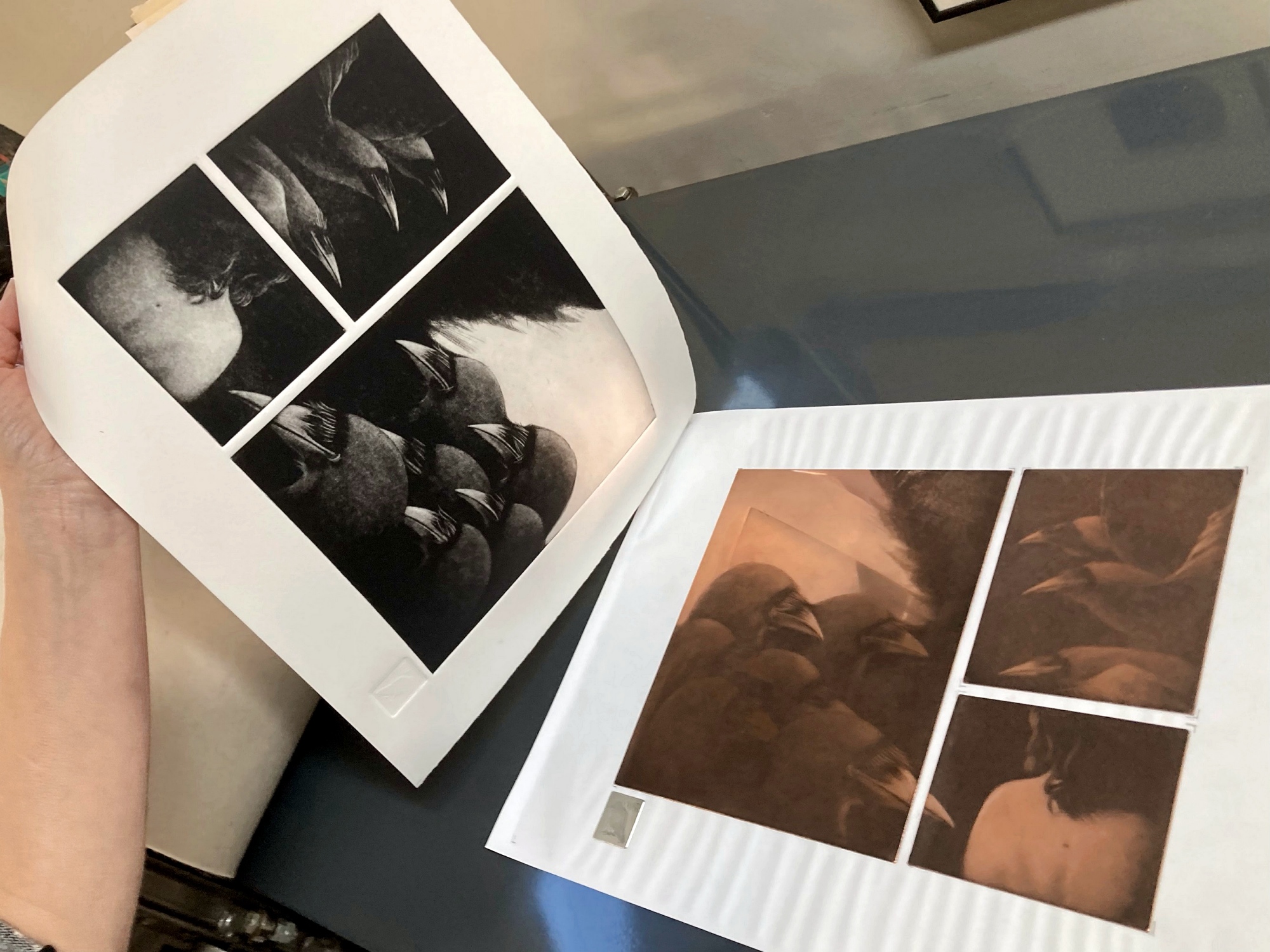
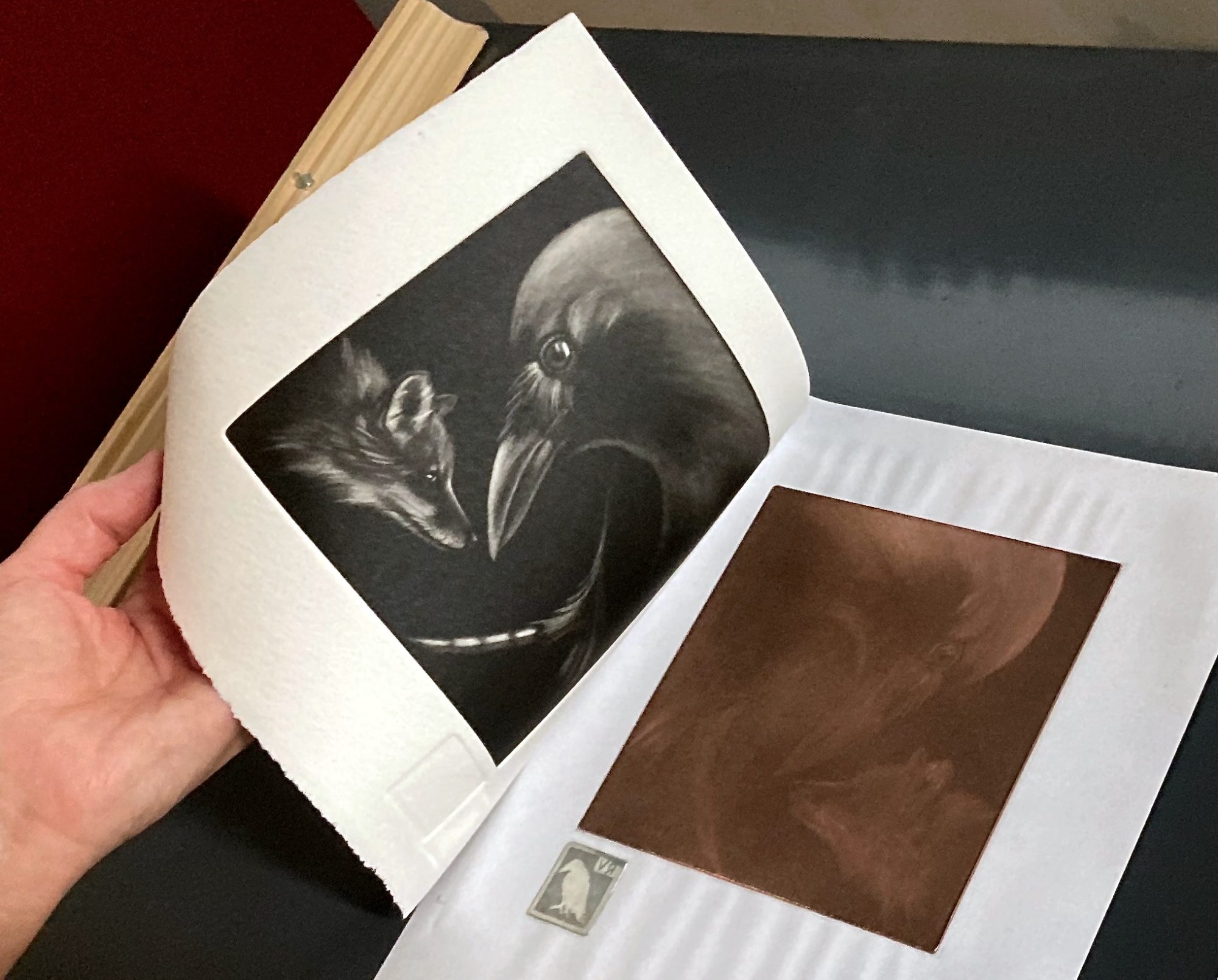
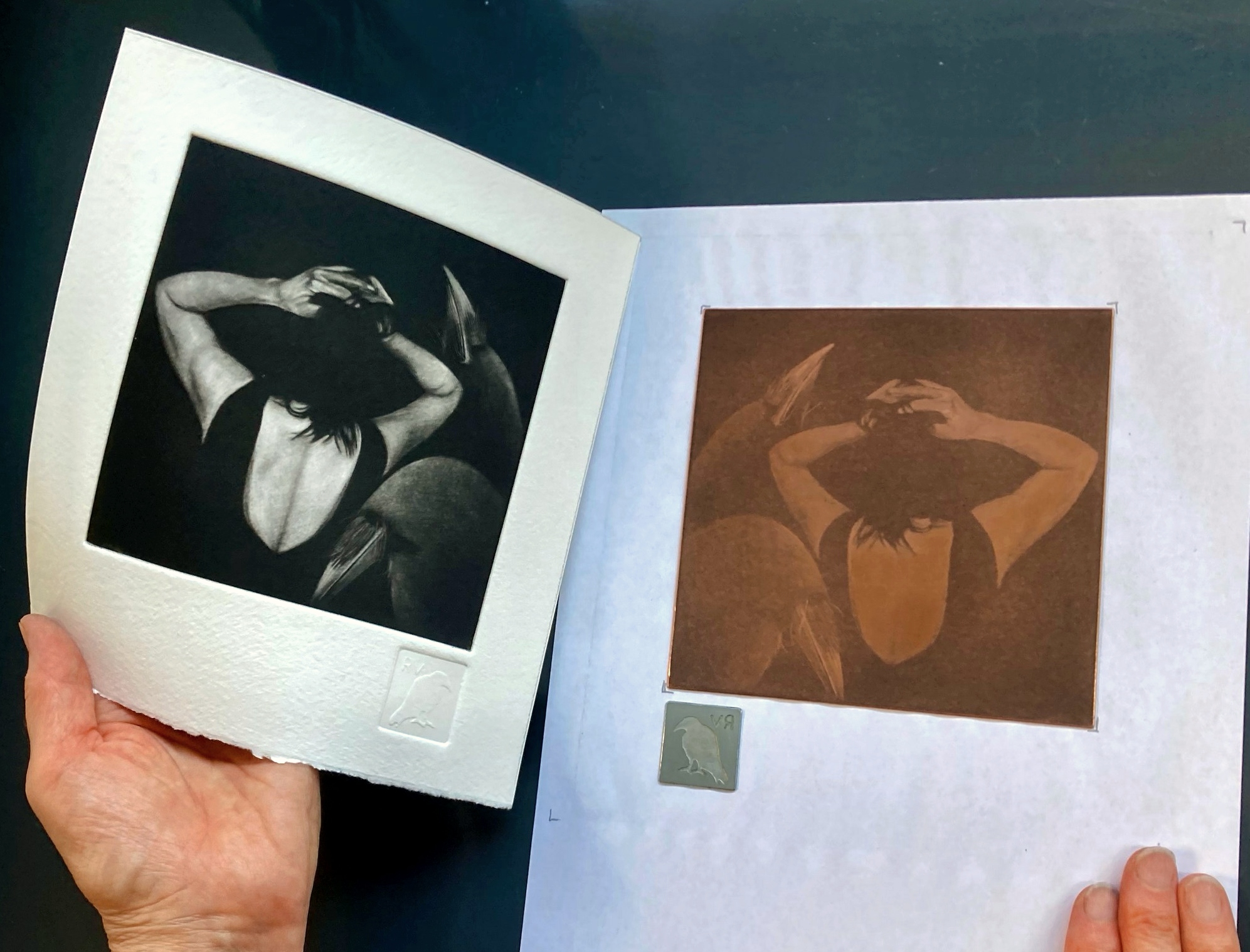
This page explains the traditional intaglio techniques used by Belgian artist Rita Vandevorst. Her work is rooted in classical printmaking craftsmanship, with a strong focus on tonal depth, texture and the physicality of the copperplate. Rita is internationally recognized for her expertise in mezzotint and her contribution to the preservation of traditional engraving methods within contemporary printmaking.
What is Mezzotint?
Mezzotint is an intaglio printing process whose prints are characterised by soft tonal gradations and rich, deep blacks, as if they were a chiaroscuro. No other etching technique is capable of producing such velvety and nuanced tones. It is a printmaking technique that allows for highly detailed work and has the advantage that no etching acid is required to etch the copper plate.
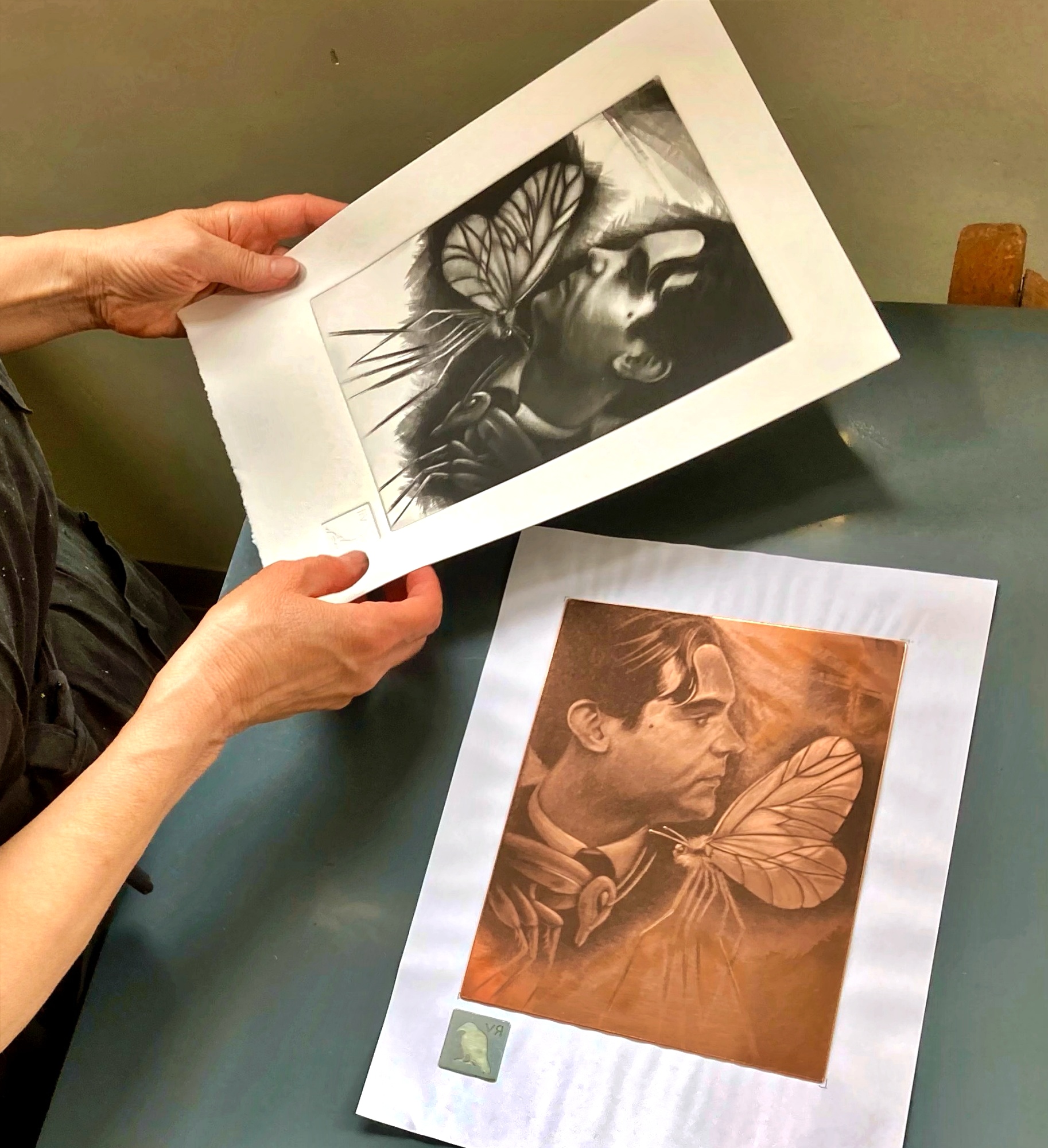
Another major difference from other etching techniques is that one begins with a black base – a fully roughened copper plate – into which the grey tones are scratched and polished until they become white. The scratched image thus prevents the transfer of ink during printing; it is therefore a negative process.
The word ‘mezzotint’ is derived from the Italian ‘mezzo-tinto’, meaning ‘middle tone’ or ‘half-tone’. The mezzotint technique is also known as ‘la manière noire’ or ‘English print’.
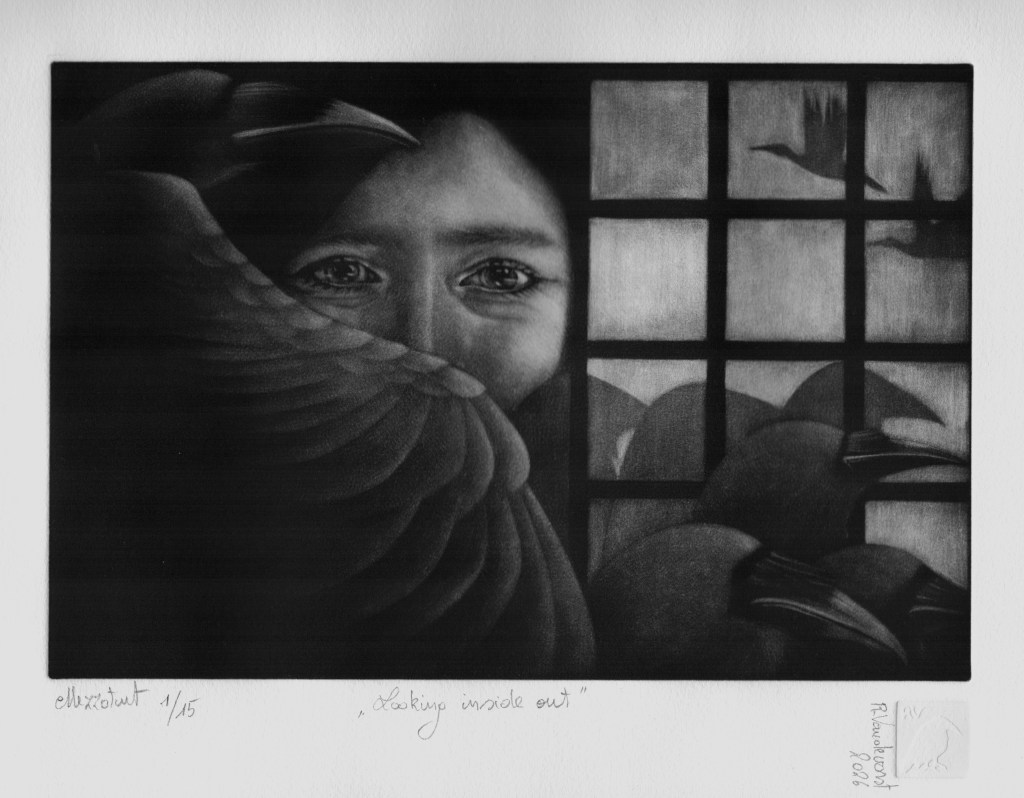


The unique character of Mezzotint
Mezzotint stands as one of the most intricate and expressive forms of intaglio printmaking, with its captivating ability to capture a vast spectrum of tonal depth and texture. Known for its velvety blacks and rich gradations of light and shadow, mezzotint offers a unique experience for both the artist and the viewer. Over centuries, this technique has carved out a distinct place in the history of art, continuously evolving while retaining its signature atmospheric quality. Mezzotint is an intaglio technique where the artist builds an image from dark to light. Rather than cutting lines, the process relies on creating a textured surface that holds ink in thousands of tiny burrs, allowing for soft, seamless transitions from rich blacks to subtle highlights. This subtle interplay of light and shadow forms the foundation of mezzotint's dramatic and nuanced visual language.

The origins of mezzotint can be traced back to the 17th century, where the technique was first developed by the German artist and engraver Ludwig von Siegen. Initially, mezzotint was used as a means to reproduce paintings and works of art with a high degree of realism and depth, which was an innovation for its time. The breakthrough of this method lay in its ability to achieve almost photographic levels of tonal variation, an aspect that made it particularly suited for depicting the play of light and shadow in landscapes, portraits, and still life compositions.

The artist begins by systematically rocking a copper plate using a serrated steel blade called a rocker. This creates a dense, uniform field of tiny burrs over the entire surface. If inked at this stage, the plate prints a solid, velvety black. The artist then works backward using scrapers and burnishers to smooth specific areas, reducing their ink capacity to reveal delicate grays and pure whites. This labor-intensive process requires immense patience and skill, as the artist must achieve a perfect balance between the textures, carefully creating every gradient of light and shade, from the deepest blacks to the most delicate highlights.

In the modern era, mezzotint has experienced a renaissance of sorts. While the technique was once overshadowed by more rapid methods of reproduction, contemporary artists have embraced its rich, tactile nature and capacity for producing prints that are both visually striking and physically textured. The deep, luminous quality of mezzotint prints has found new audiences among collectors and curators, who appreciate the rarity and craftsmanship involved. Artists working in mezzotint today continue to push the boundaries of the technique, experimenting with color, layering, and even incorporating digital tools to enhance traditional methods. The process remains painstakingly slow and methodical, yet it has garnered renewed respect for its unparalleled ability to convey mood, atmosphere, and the subtleties of light.

This modern resurgence of mezzotint offers new possibilities for both traditional printmakers and contemporary artists, bridging the gap between classical methods and modern sensibilities. As more people discover the timeless beauty of mezzotint prints, the technique's ability to evoke emotion and narrate complex stories through its delicate interplay of light and dark continues to captivate new generations. It is a perfect example of how an ancient craft can find fresh life in an ever-evolving art world.
My Mezzotint Collection
- All Aquatints (50)
- Aquatints 2010 (15)
- Aquatints 2012 (3)
- Aquatints 2016 (19)
- Aquatints 2020 (13)
- All Exlibris (20)
- Exlibris 2022 (1)
- Exlibris 2023 (7)
- Exlibris 2024 (8)
- Exlibris 2025 (2)
- Exlibris 2026 (2)
- All Mezzotints (99)
- Mezzotints 2021 (30)
- Mezzotints 2022 (20)
- Mezzotints 2023 (14)
- Mezzotints 2024 (10)
- Mezzotints 2025 (17)
- Mezzotints 2026 (8)
Mezzotint in the Media
° Technical Handbook Mezzotint - Robert De Groff - ISBN 979-8720302450

° Mezzotint Handbook - Carol Wax - ISBN 978-0-8109-3603-8

° Mezzotint Handbook, 2nd edition - Carol Wax - ISBN 978-0-7643-6685-7.

° Handbook Intaglio Engraving - Olivier Dekeyser - ISBN 978-2-416-00422-3.

° Mezzotint article from Wikipedia, the free encyclopedia.

° About Mezzotint, Galleri Heike Arndt Berlin.
The History of Mezzotint.
The German artist Ludwig von Siegen produced his first dated mezzotint in Amsterdam in 1643. It was a method of reproducing portrait paintings as prints, thereby making them accessible to a wider audience.
Until the invention of photography, mezzotint was particularly popular in England, but its popularity waned thereafter. In the mid-twentieth century, however, mezzotint was revived.
Until the invention of photography, mezzotint was particularly popular in England, but its popularity waned thereafter. In the mid-twentieth century, however, mezzotint was revived.
Invented in the 17th century by Ludwig von Siegen, mezzotint became famous for its painterly depth and rich chiaroscuro. Today, it remains one of the most labor-intensive and expressive forms of printmaking, celebrated for its atmospheric quality and unrivaled tactile depth.
Historical details & famous masters
The story of mezzotint begins in the 17th century, where it is credited to German engraver Ludwig von Siegen, who introduced this groundbreaking technique while in Amsterdam. His innovative process involved using a special tool to roughen the surface of a metal plate, creating a network of minute indentations. These indentations would later hold ink, and through a meticulous process of scraping and burnishing, the artist would gradually reveal the image with varying degrees of darkness and lightness. Unlike traditional engraving or etching, where lines are the primary method of creating tone and detail, mezzotint’s roughened surface allows the artist to build up depth, resulting in striking tonal nuances.

With the introduction of the mezzotint rocker, attributed to Prince Rupert of the Rhine, the process was further refined. This curved blade, equipped with multiple tiny teeth, would be rocked back and forth over the plate to create a consistent texture. A fully rocked plate, covered in a dense mesh of tiny pits, could hold a significant amount of ink. This feature of the technique made mezzotint an ideal choice for rendering deep, rich blacks that were integral to creating the haunting, atmospheric qualities often found in portraits and scenes of great emotional depth. As the surface was gradually scraped or burnished away in certain areas, the image emerged in an organic way, revealing a nuanced play of light and shadow that was almost painterly in nature.

Despite its prominence in the 18th century, mezzotint began to decline in the latter part of the 19th century, largely due to the advent of photography. The photographic process provided a faster, more efficient method for reproducing images, leading to a shift in the way artists and the public viewed printmaking. As photography took center stage, the labor-intensive nature of mezzotint, with its painstaking process of rocking, scraping, and burnishing, became less appealing to many printmakers. However, the art form did not disappear entirely. A small but dedicated group of artists, drawn to the meticulous nature of mezzotint, continued to experiment with the technique, discovering new ways to exploit its potential.

In the 20th and 21st centuries, mezzotint experienced a revival, thanks to both a renewed appreciation for traditional techniques and innovations in materials that made the process more accessible. One of the key developments in this renaissance was the introduction of pre-rocked plates, particularly those made from aluminum. These plates, which are often manufactured in Japan, eliminate the need for the time-consuming process of hand-rocking the metal surface, making mezzotint more approachable for contemporary artists. While aluminum plates are softer and may produce fewer prints before showing signs of wear, they are an ideal starting point for those new to the technique. By using these pre-ground plates,
artists can focus more on the creative aspects of mezzotint, such as scraping and burnishing, without the significant upfront investment required for traditional copper plates.

These modern innovations have breathed new life into mezzotint, ensuring its continued relevance in the contemporary art world. Artists now have the opportunity to experiment with mezzotint in ways that were not possible in earlier centuries. The use of pre-rocked plates, combined with modern printing technologies, has opened the door for a new generation of printmakers to explore the rich tonal qualities that define mezzotint while reducing the physical demands of the process. As a result, mezzotint remains an appealing choice for artists who are drawn to its ability to convey subtlety and mood, offering a unique way to engage with both the materiality of printmaking and the beauty of tonal depth.

Mezzotint’s enduring appeal lies in its ability to convey a wide range of textures and tones, making it an invaluable tool for creating atmospheric effects in both traditional and contemporary contexts. The method is particularly effective for capturing soft transitions of light, which allows artists to work with a high degree of nuance and precision. Whether depicting the intricate folds of fabric or the delicate play of light on a subject’s skin, mezzotint offers a level of sophistication and depth that is hard to replicate with other techniques. Its emphasis on the artist’s hand and the tactile nature of the process also provides a sense of intimacy, offering a connection between the creator and the viewer that is rooted in time and labor.
The Role of Texturing.
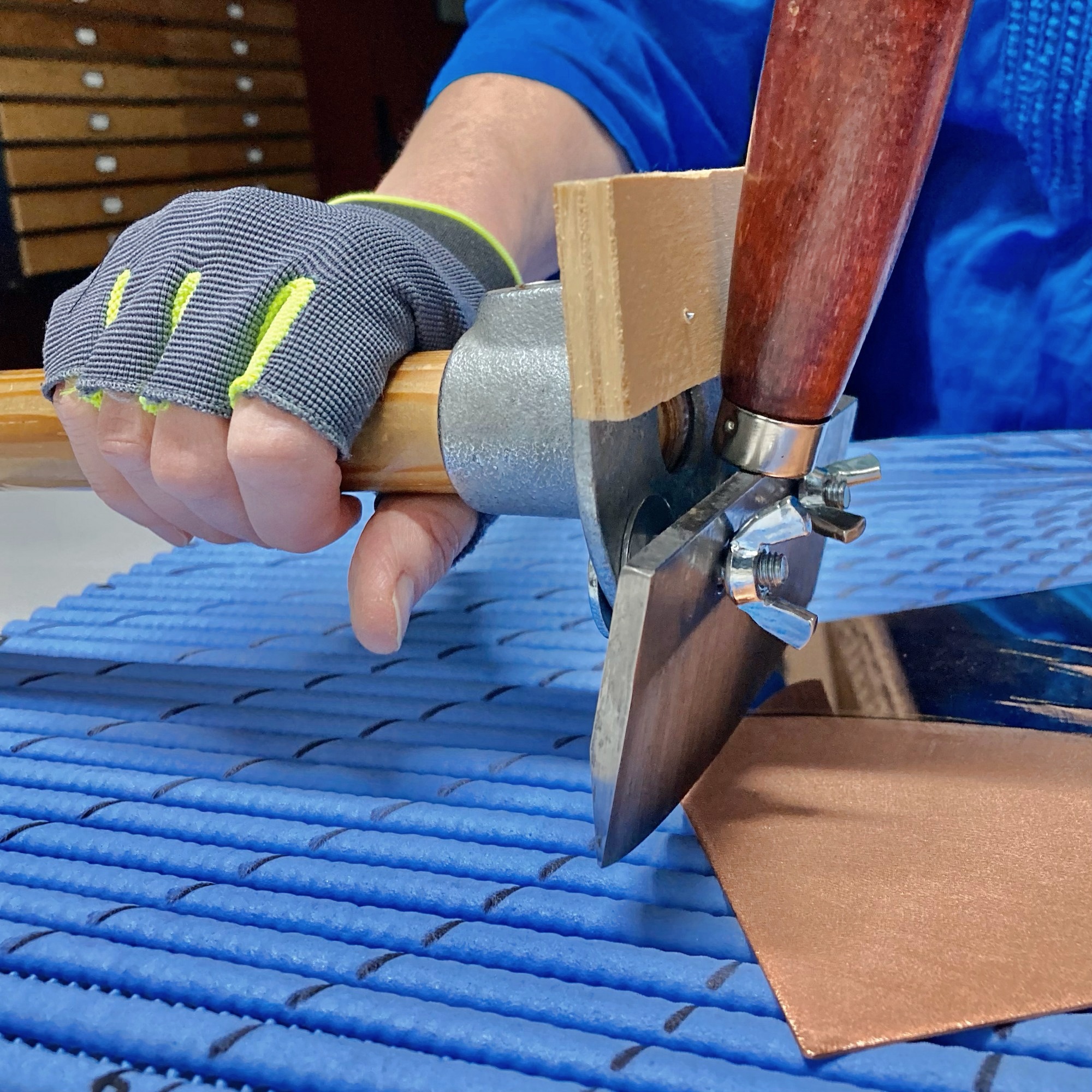
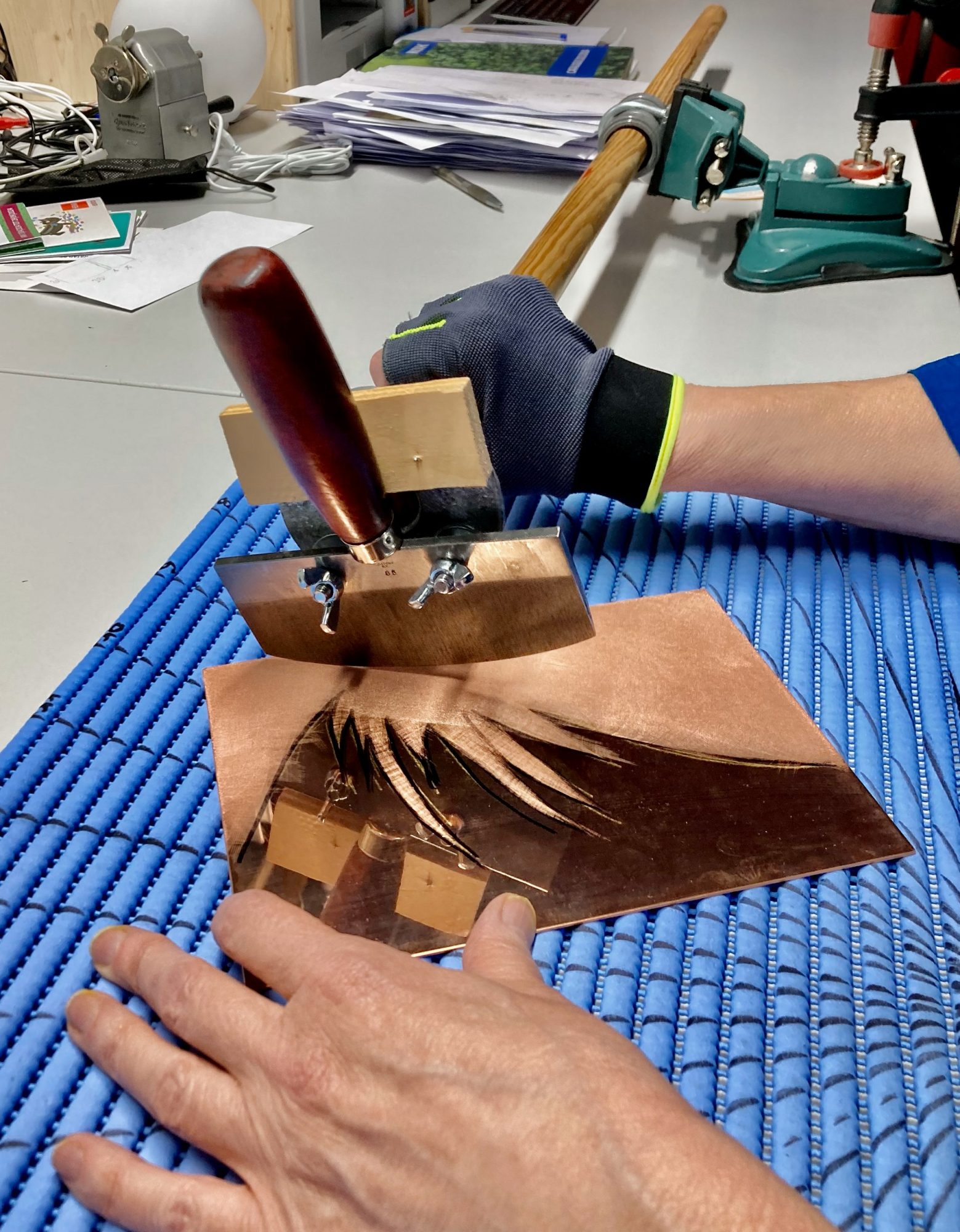
To achieve a deep black background, you first need to completely roughen the bevelled copper plate, and for this you need a grater (Rocker or Berceau). By moving the grater back and forth across the plate in a rocking motion, the teeth create tiny pits and burrs on the copper surface. Only when absolutely no light is reflected by the copper is the plate sufficiently rocketed. If the plate were to be printed at this stage, it would produce a solid, deep black print (Lyons Rocker L335-3-85 for small plates and Lyons Rocker L335-5-85 for the larger ones).
The rocker must be set at an angle of 5 degrees (180:36=5) to the plate and must be rocked through approximately 36 cycles to create a dense texture of burrs. For an average plate measuring 15 by 20 cm, this amounts to 5 hours of rocking spread over 2 days! To make this arduous task easier, a tool can be used to rock the plate more efficiently; the rocking iron is then attached to the end of a long wooden handle that can swing within a fixed mould.
Understanding the rocker & burr formation
The core of mezzotint lies in the texturing phase, where the plate is transformed into a surface that will hold ink in different degrees. This is achieved through the use of the mezzotint rocker, a curved, serrated tool that creates a series of fine, overlapping pits on the plate. The texture formed by the rocker is what enables mezzotint artists to control the tonal values in the print. These pits create a vast network that holds ink, and depending on how finely or coarsely the rocker is worked across the plate, the degree of roughnessand thus the darkness of the printcan vary. Finer rockers create shallower pits, while coarser ones result in deeper indentations.

Mezzotint printing is a sophisticated and intricate technique that requires a specific set of tools to achieve the finely detailed, tonal effects it is known for. The key instrument in this process is the mezzotint rocker, a specialized tool crafted from steel. This essential tool is designed with a row of sharp teeth that are used to create thousands of minute indentations on the surface of the printing plate. These indentations are the foundation for the mezzotint process, as they hold ink and create the rich, velvety textures that define the technique.

When selecting a mezzotint rocker, the artist must carefully consider the size and spacing of the teeth. A finer rocker, which has a greater number of teeth per inch, results in a smoother, more subtle texture with delicate tonal transitions. This is ideal for creating nuanced shadows and highlights in a print. In contrast, a coarse rocker, with fewer teeth and deeper indentations, results in a more pronounced texture and a stronger contrast between light and dark areas. Some artists prefer to use a combination of fine and coarse rockers to achieve a range of tonal effects, allowing for greater depth and variety in their prints.

The amount of time and effort spent on texturing directly impacts the tonal range of the final print. When the plate is rocked thoroughly, it produces a deep, dark ground that serves as the base for the image. The more a plate is rocked, the darker it will appear when ink is applied, setting the stage for the artist to work with contrasting light and dark areas. This initial step requires a deep understanding of the tools and their effect on the plate, as well as the artist’s vision for the piece they wish to create.

Once the plate has been sufficiently textured, it’s time to move on to the next phase: scraping and burnishing. These two techniques allow the artist to manipulate the tonal range by removing some of the texture to expose the smooth surface of the metal beneath, lightening the overall effect. Scraping and burnishing are done with specialized tools, each
designed to help the artist achieve fine control over the tonal transitions in the work. The scraping tool allows the artist to remove some of the rough surface, revealing brighter areas on the plate. Burnishing, on the other hand, compresses the surface, further lightening the tone by flattening the pits and creating areas of smoothness.

Through these careful manipulations, mezzotint artists are able to develop a print that contains a vast array of tonal values, from the deepest blacks to the softest grays and even the lightest highlights. It’s this remarkable ability to control the light and dark areas that makes mezzotint so particularly suited for capturing scenes with dramatic lighting or portraiture where depth and contrast are key to conveying emotion and realism.





Scraping and Burnishing.
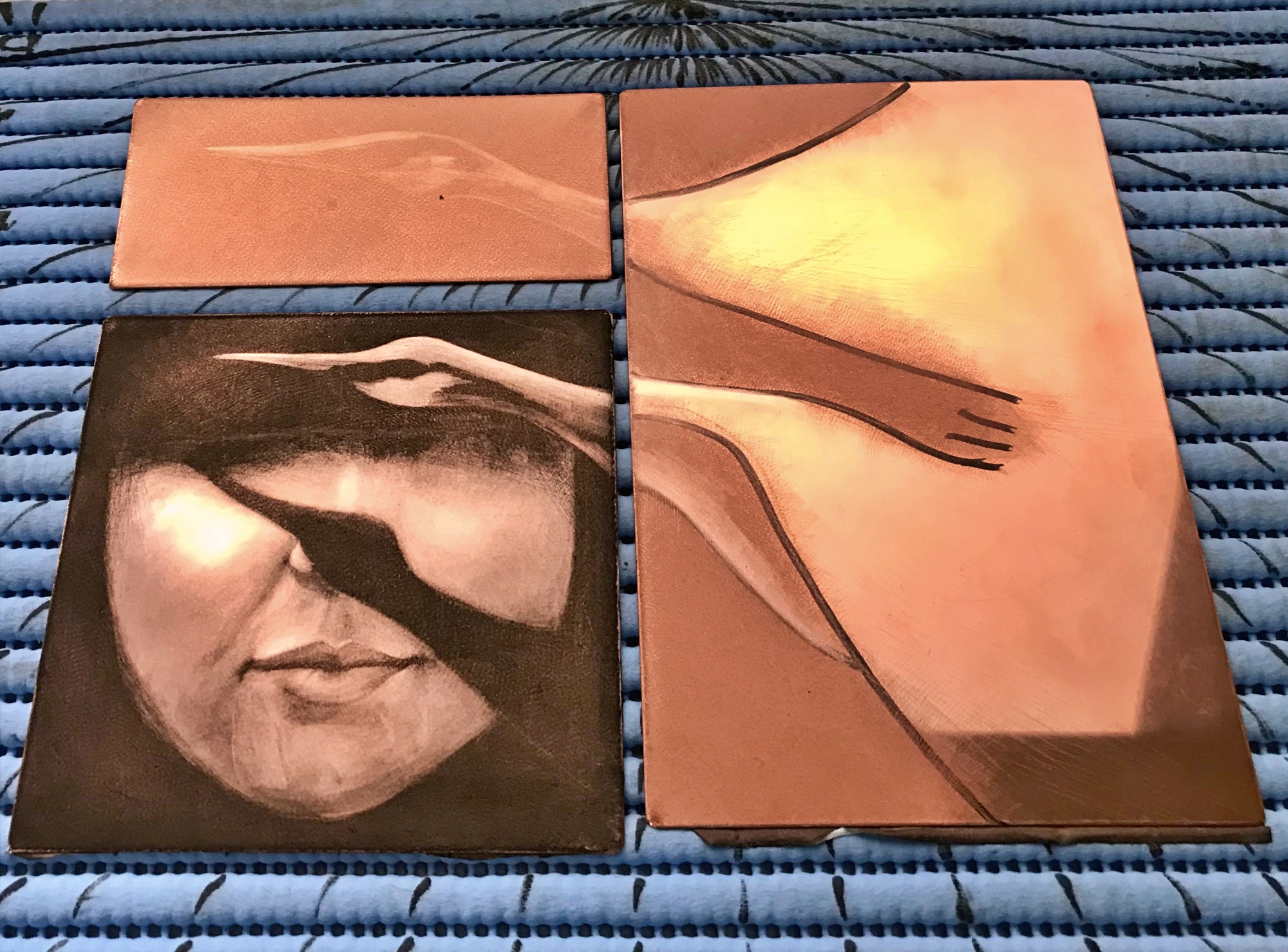
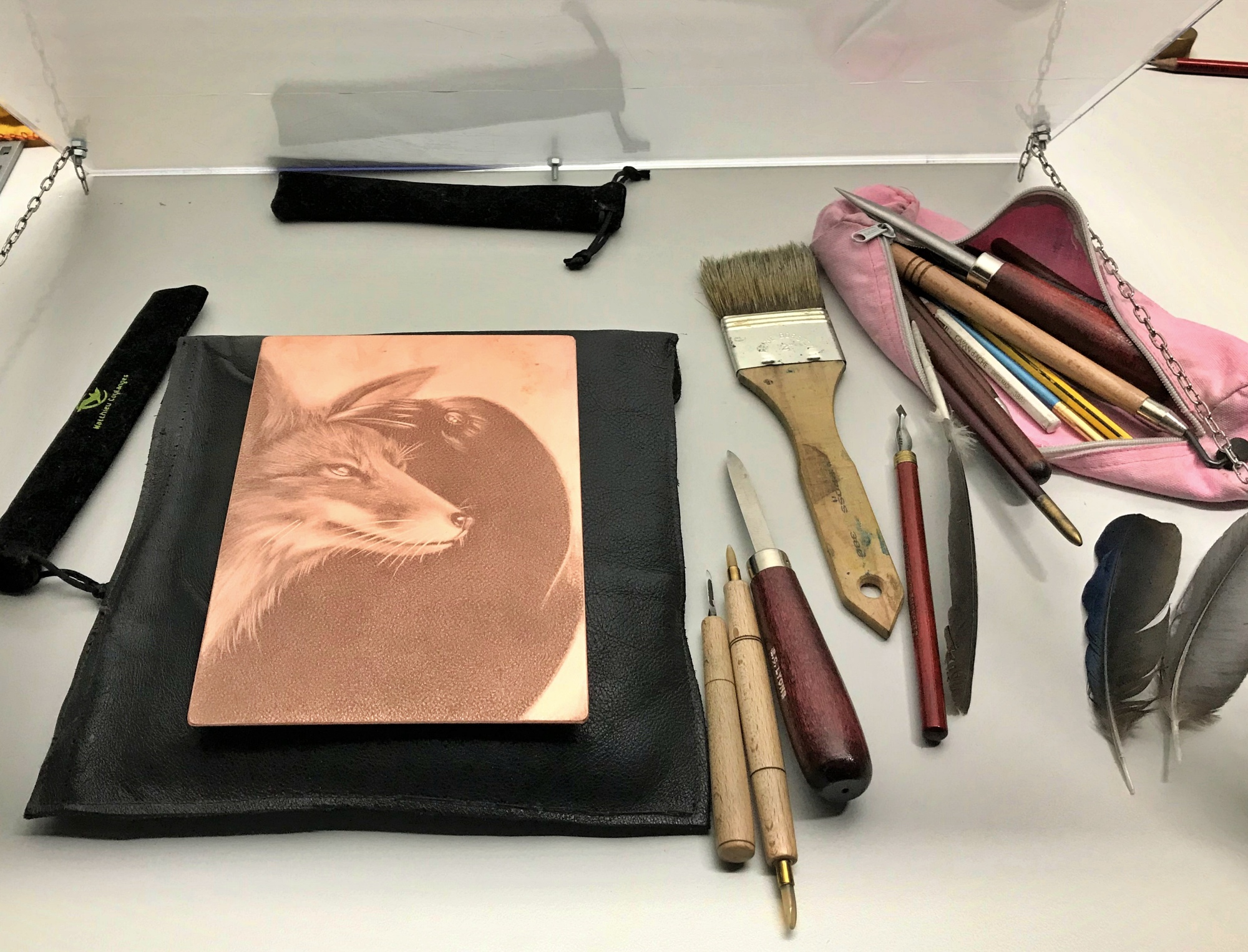
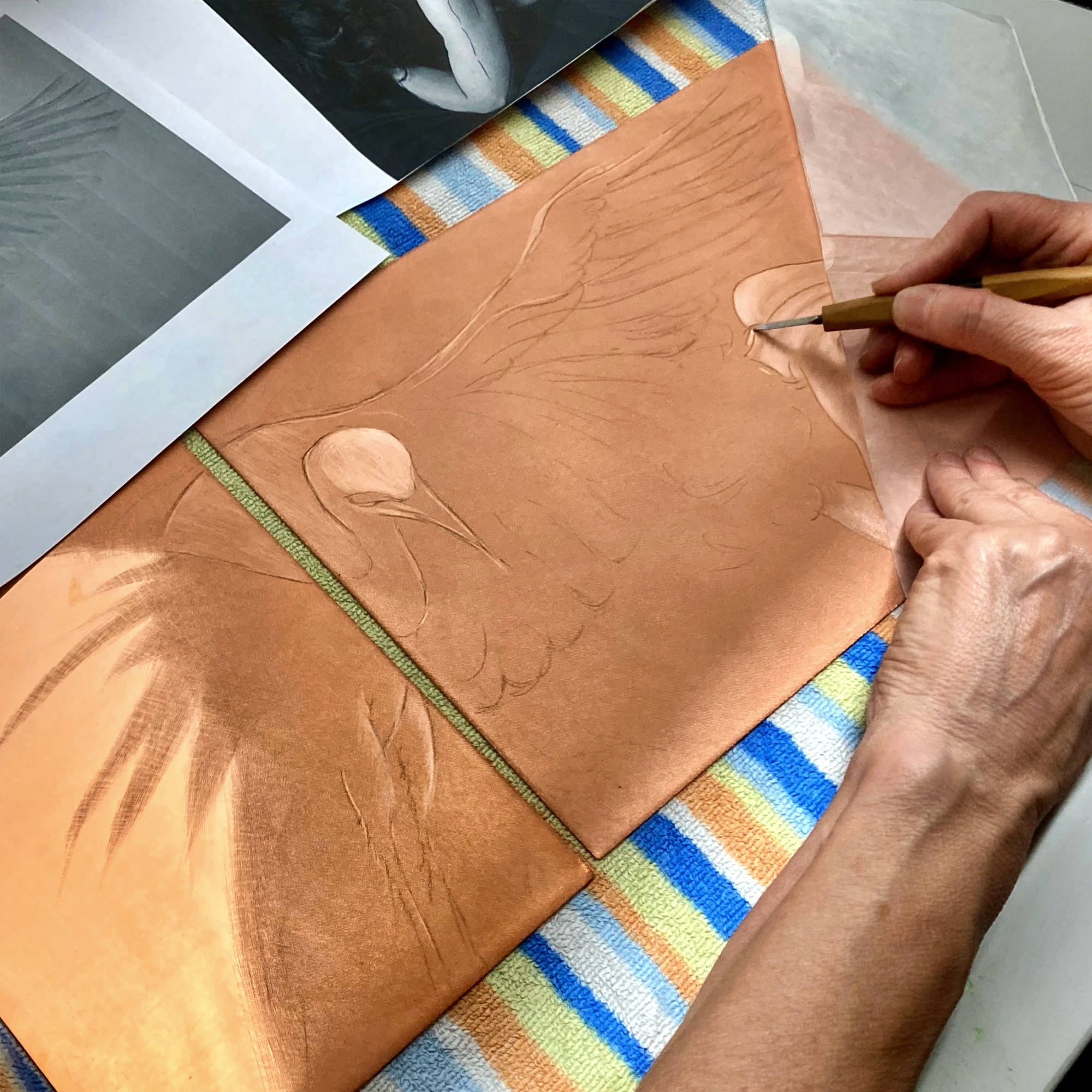
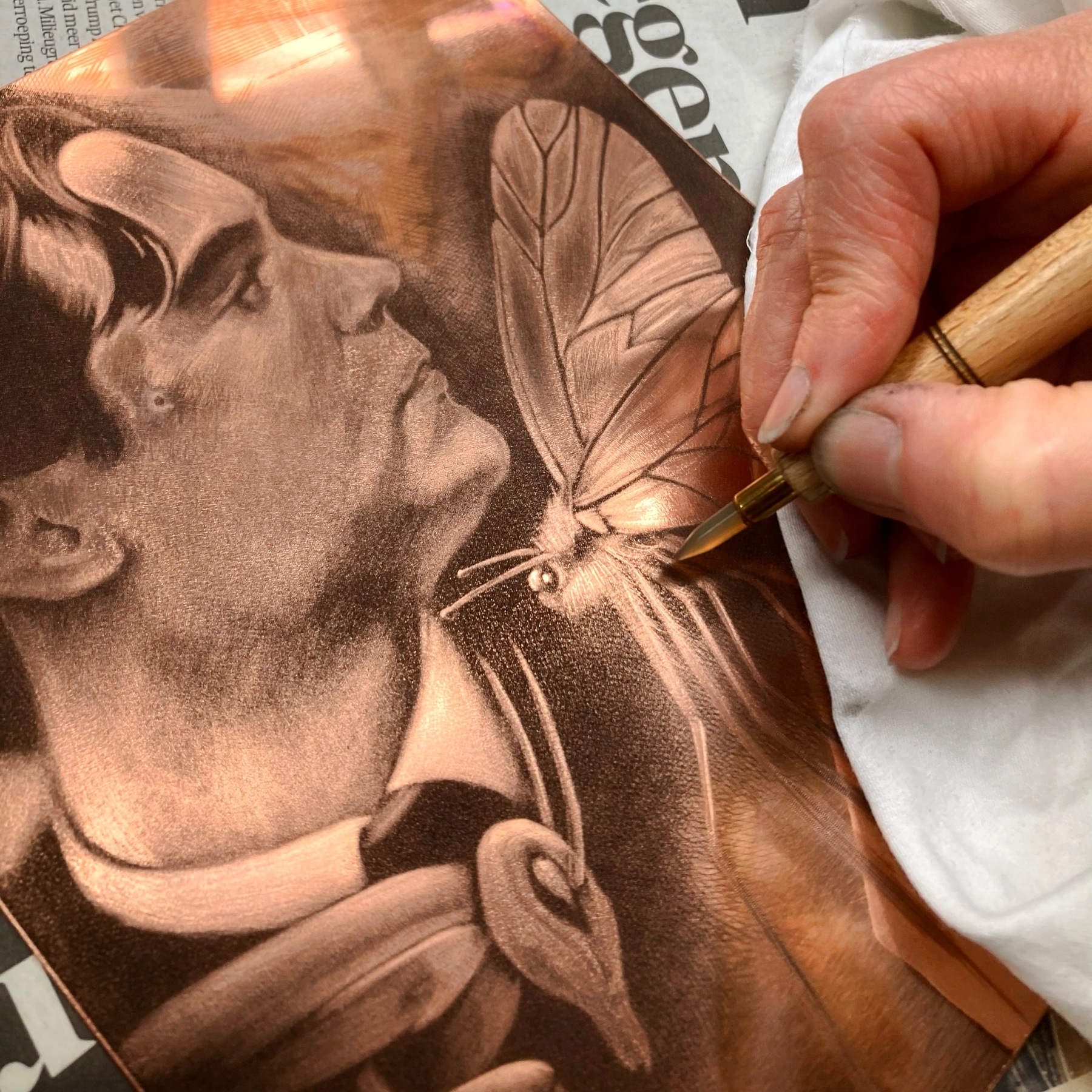
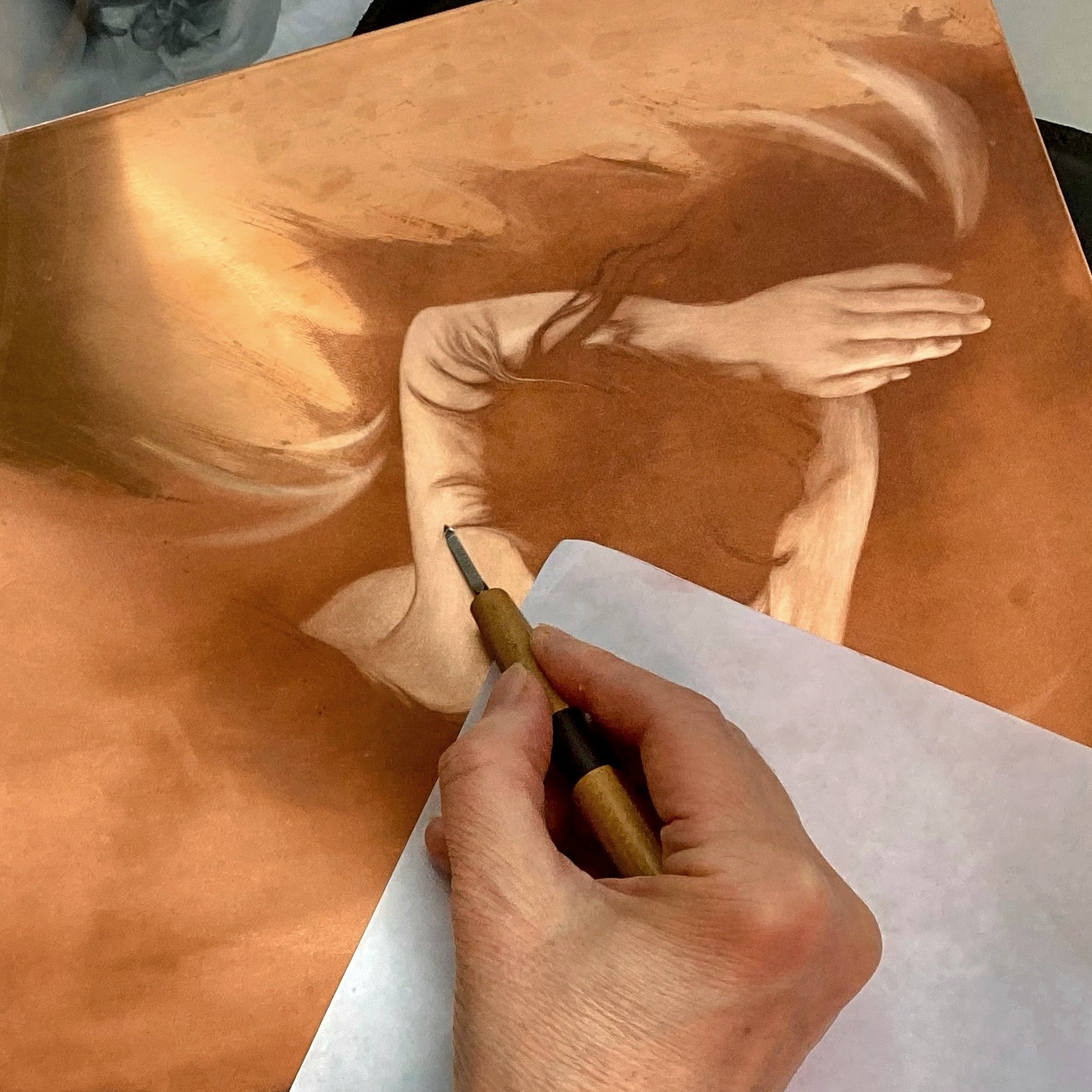
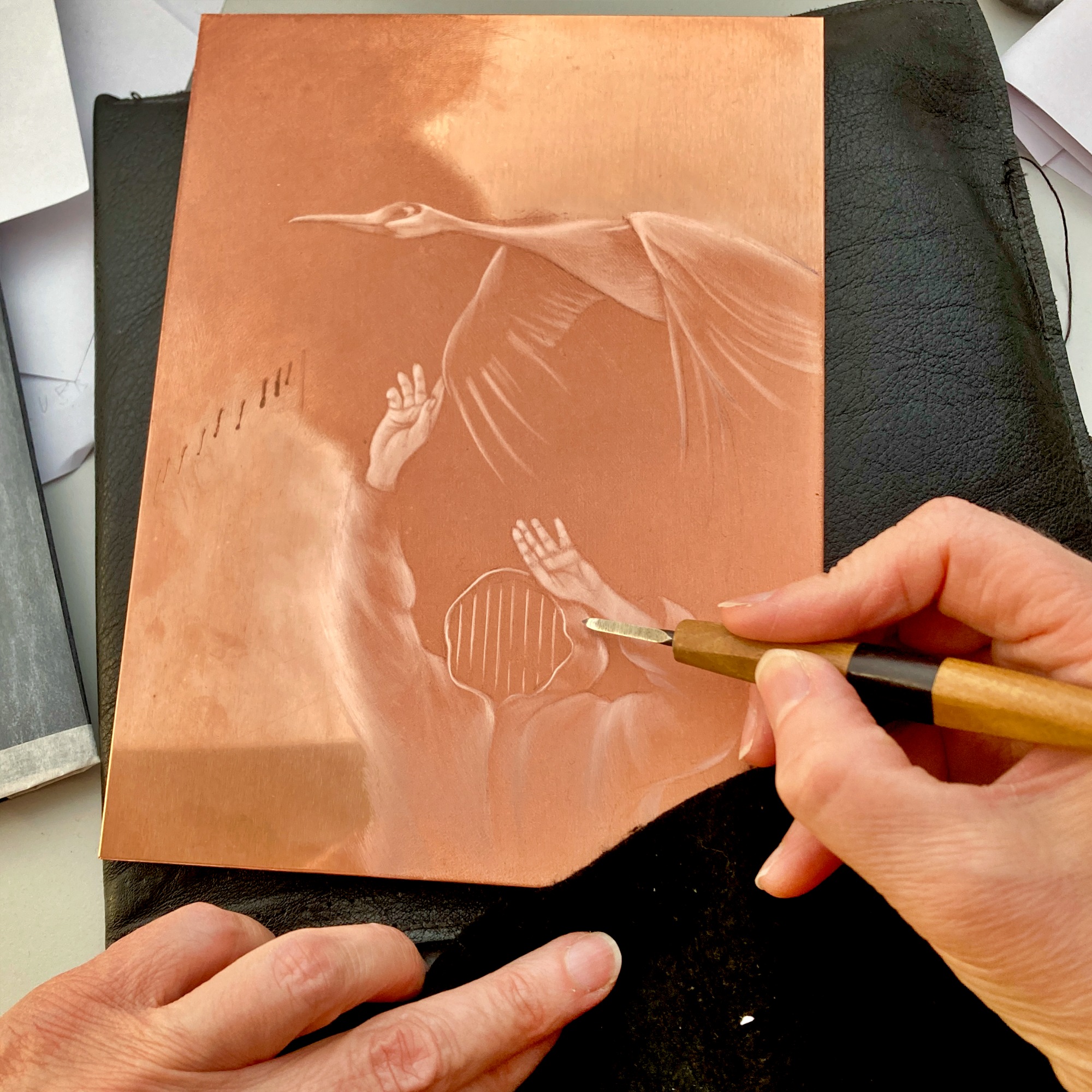
After you have transferred the sketch (white pencil on black paper) in mirror image to the roughened copper plate, you can start scraping away. To obtain a sharp view of the scratched copper plate, it is best to use a diffuser screen.
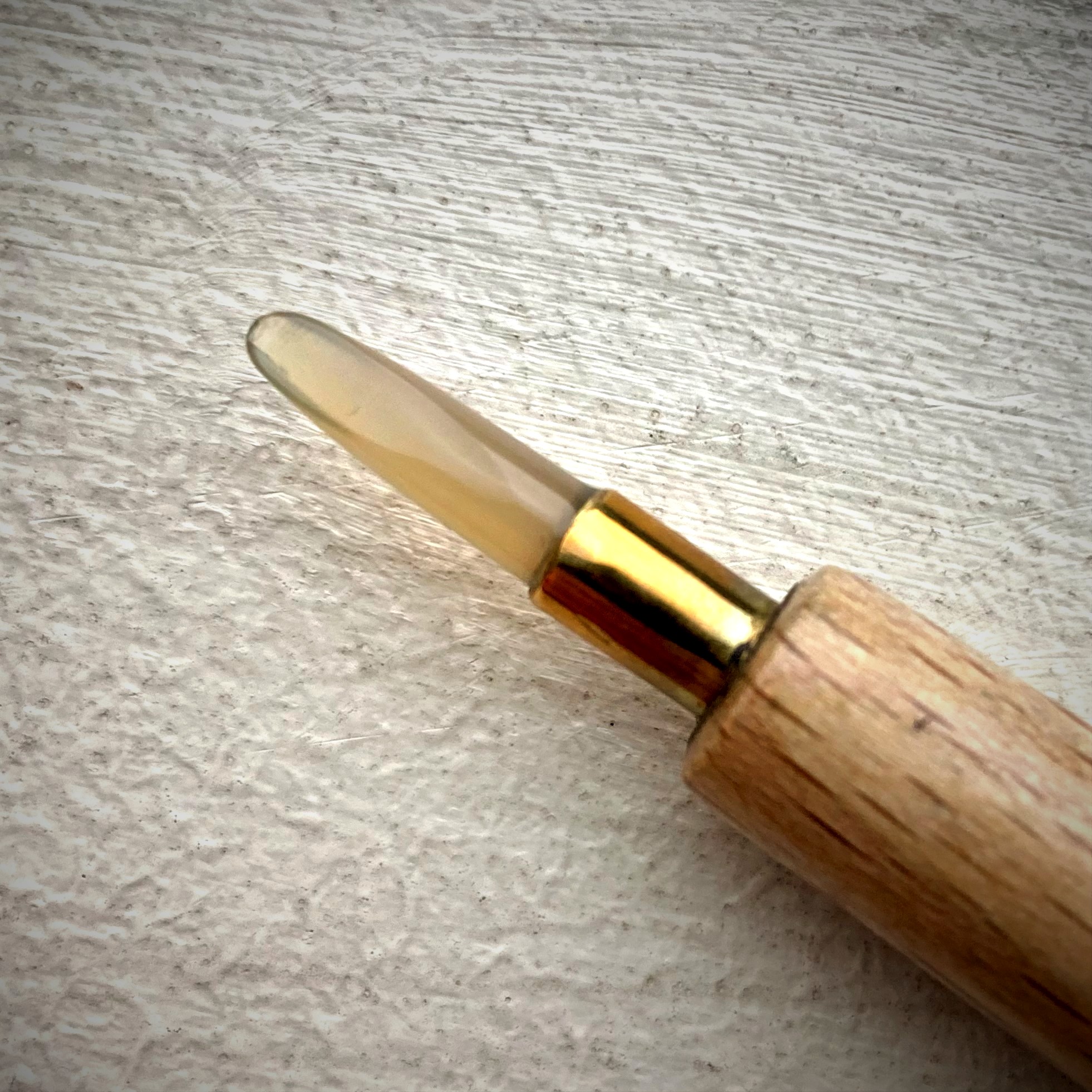
The polishing is done with an agate stone and brings out the white in the etching. You can also polish the gray tones to make it easier to teeing off the ink.
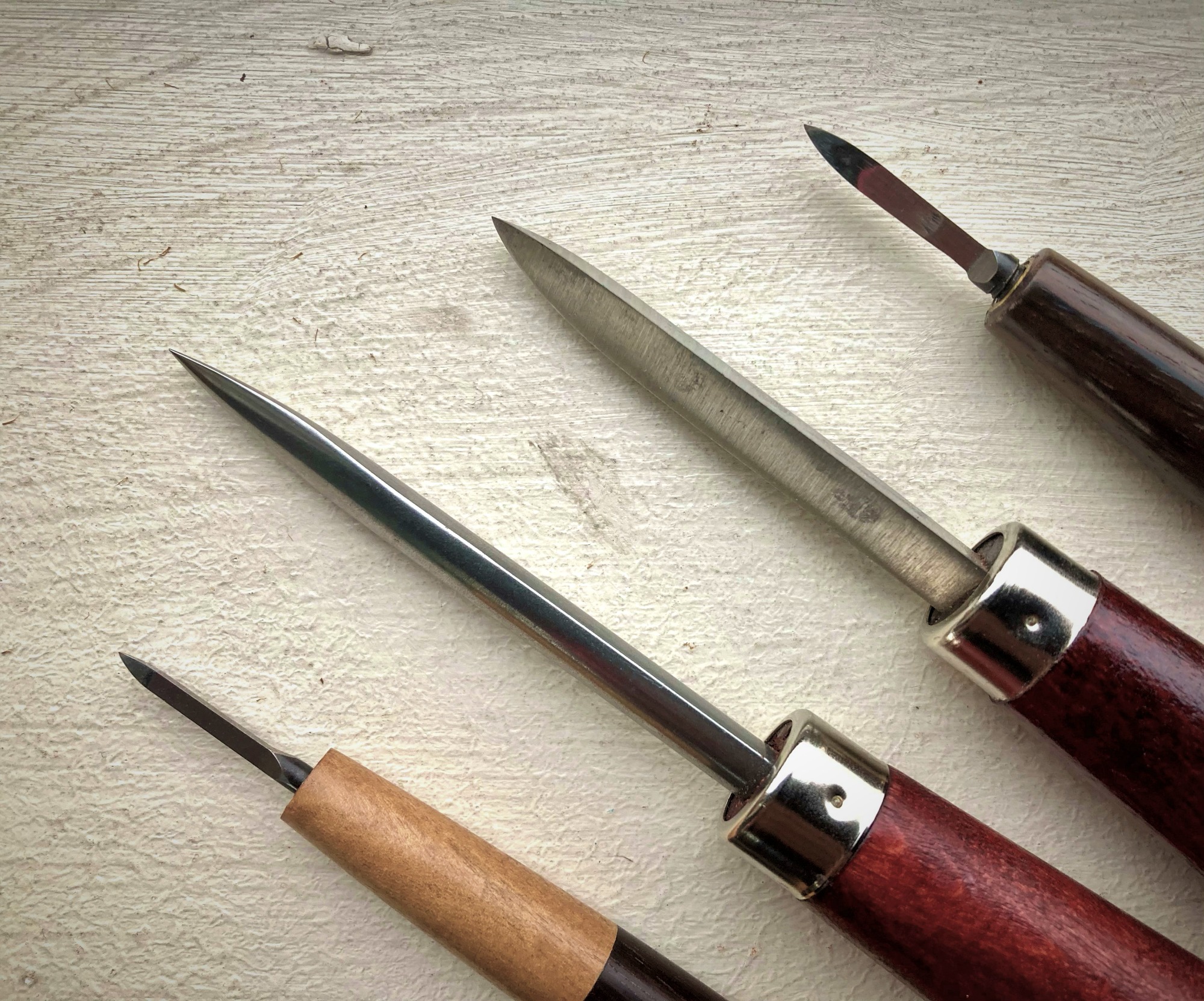
Detailed guide to scrapers and burnishers
Creating a mezzotint is not a quick process. It is one of the most time-consuming printmaking techniques, requiring immense patience and meticulous care. Artists typically work from the darkest areas of the plate to the lightest, starting with the areas that will appear black in the final print and gradually working their way to the lighter tones. This gradual process allows for a subtle development of the image, with each scrape and burnish revealing more and more detail.

The use of scrapers and burnishers is a delicate art in itself, as the artist must continuously adjust the pressure and angle of the tools to control the tonal values. Scraping is used to remove some of the textured surface, making the tone lighter, while burnishing compresses the texture, flattening the pits and lightening the area even further. Both tools give the artist the flexibility to work with a range of textures and finishes, allowing for fine gradations of light and dark, which is particularly useful in creating realistic shading and highlighting effects.

Scrapers are used to carefully remove burrs from the surface of the plate, helping to smooth out areas of excessive texture and revealing lighter tones. These tools come in different shapes and sizes, with smaller scrapers being ideal for fine details and larger ones used for broader areas of tone. Burnishers, which are used to compress and smooth the plate's surface, are another crucial tool. The burnishing process can help to flatten certain areas of the plate, creating lighter regions while preserving the depth and richness of the darker areas. A small, round ball burnisher is often used for delicate areas, whereas larger burnishers are employed for broader transitions. The combination of these tools gives the artist complete control over the tonal variations and textures within their work.

Scraping and burnishing are not one-time steps but rather a continuous process of refinement. The artist may need to return to the plate several times, adjusting areas that require more light or dark, in order to perfect the image. Some artists may prefer to focus on scraping and leave burnishing to a minimum, while others may use burnishing extensively to achieve smoother tonal transitions. These different approaches give each artist the freedom to develop their own unique style within the mezzotint process, whether they aim for a soft, diffused light or stark contrasts. The tools used also vary depending on the artist’s preferences, from narrow scrapers that offer precise control to wider burnishers that can smooth larger areas.

The beauty of mezzotint lies in its ability to create a print with an extraordinary tonal range, something that is difficult to achieve with other printmaking techniques. The technique’s ability to create deep shadows and luminous highlights gives it a striking visual impact that makes it a favorite for those seeking to capture the subtle interplay of light in their artwork. The process may be labor-intensive, but the final result is a print that resonates with depth, richness, and texture a true masterpiece that has been carefully honed and perfected through patient, skilled labor.

For artists who dedicate themselves to mastering this craft, mezzotint offers a rewarding opportunity to create prints that are rich in contrast and full of visual drama. Whether exploring the human form or the interplay of light and dark in a landscape, mezzotint allows for a depth of expression that is unparalleled in the world of printmaking. It’s a process that demands precision, but it is ultimately one that rewards the artist with prints that captivate and endure.



Inking and Wiping the copper plate.
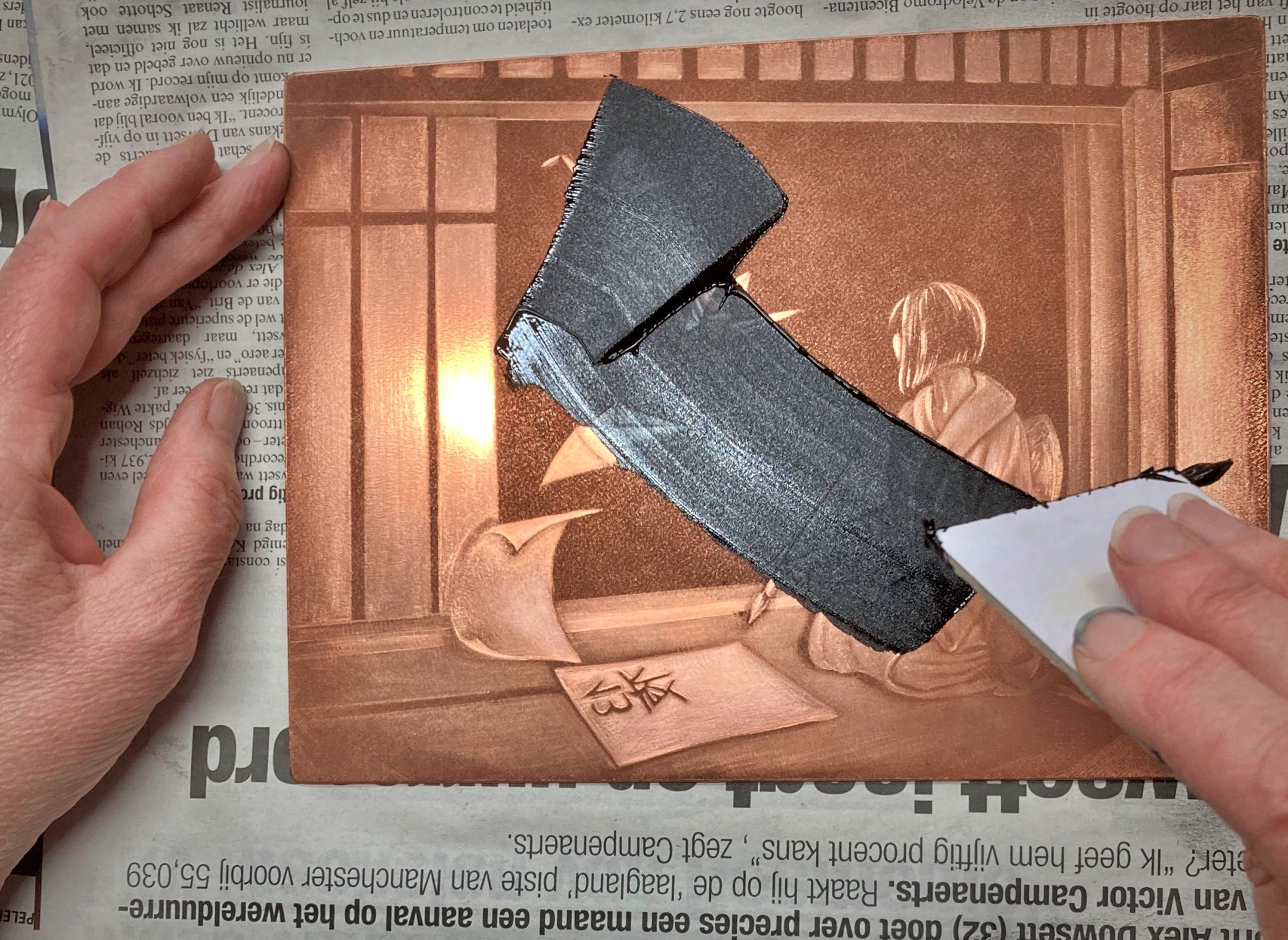
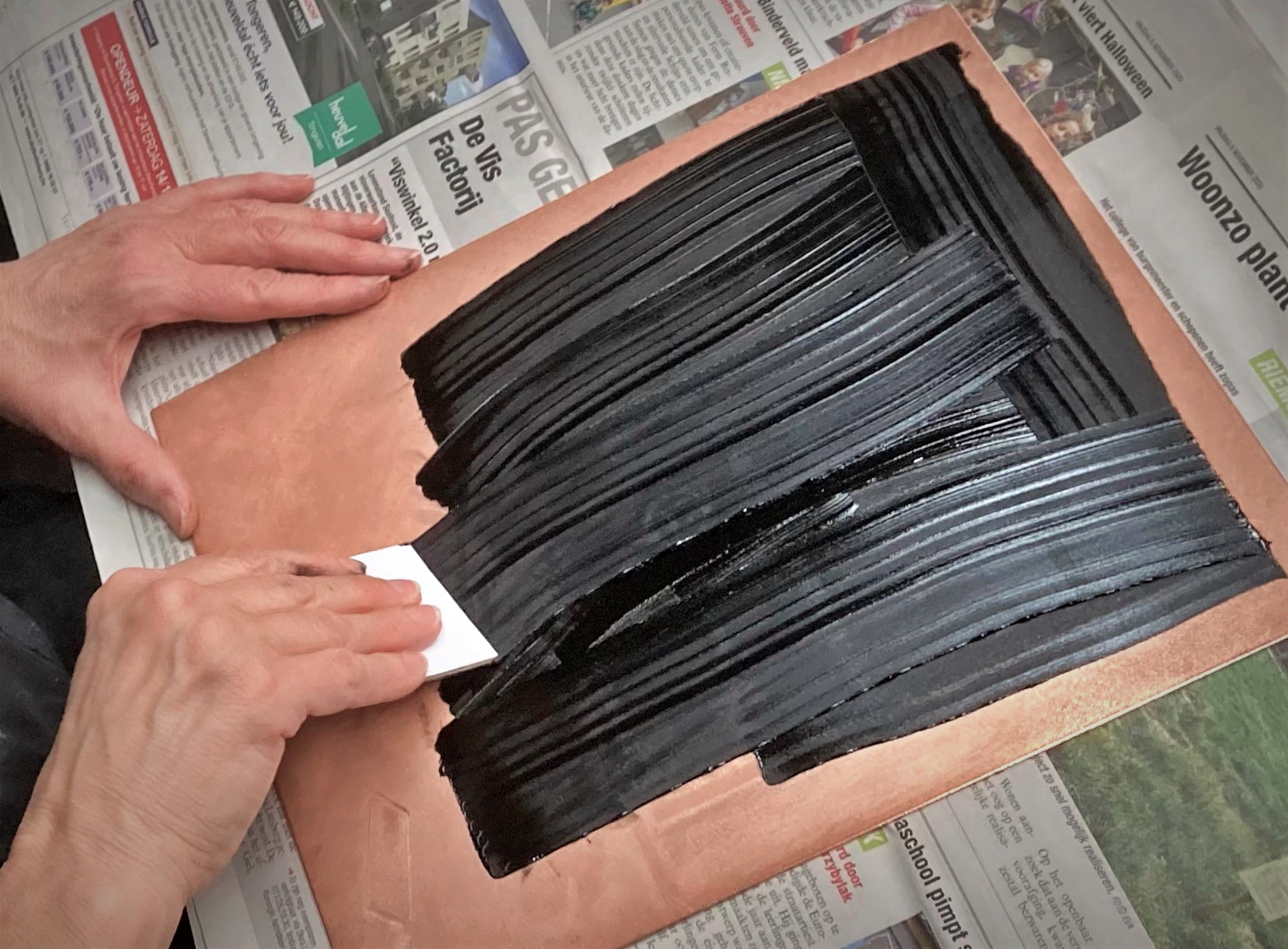
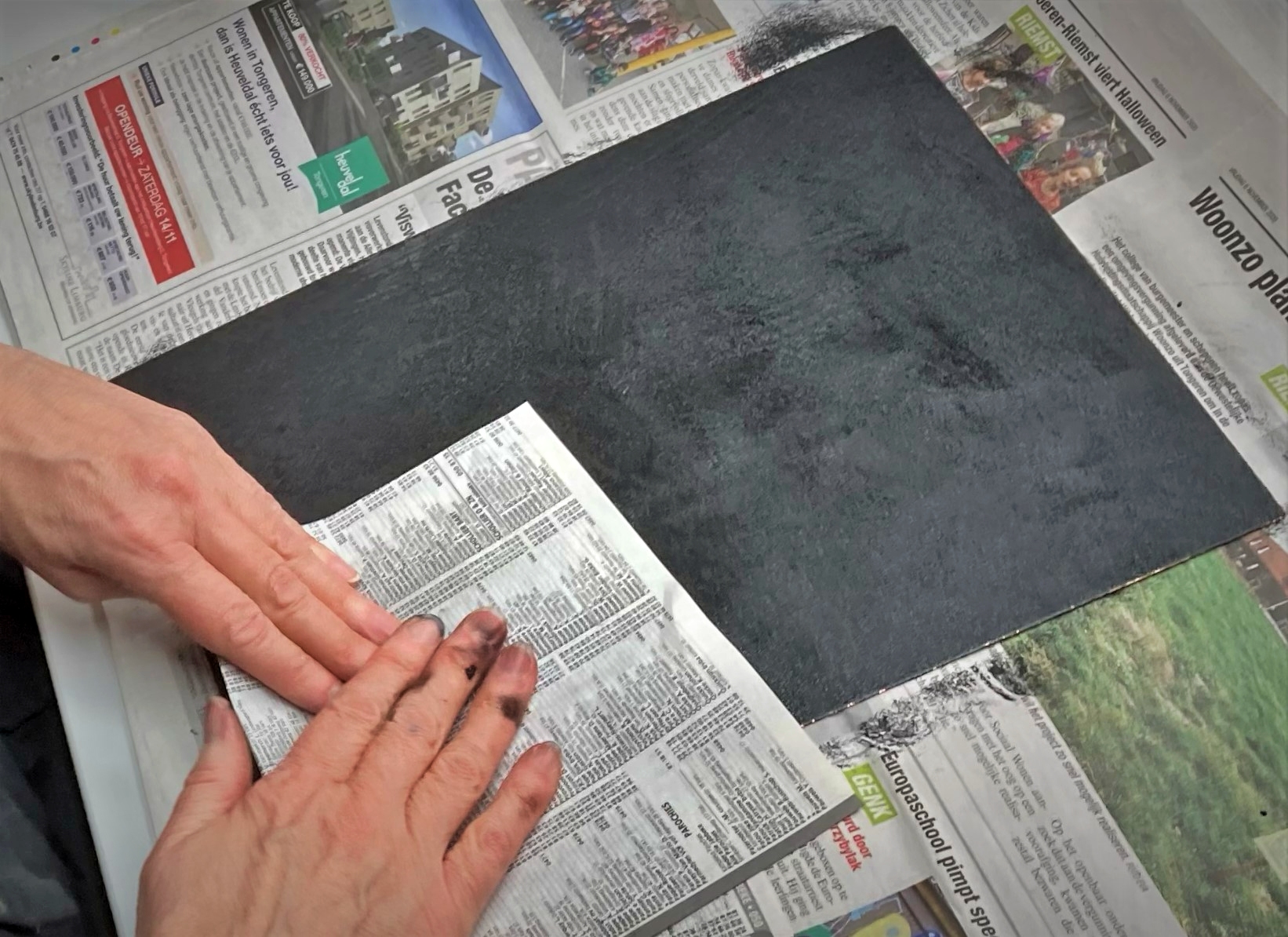
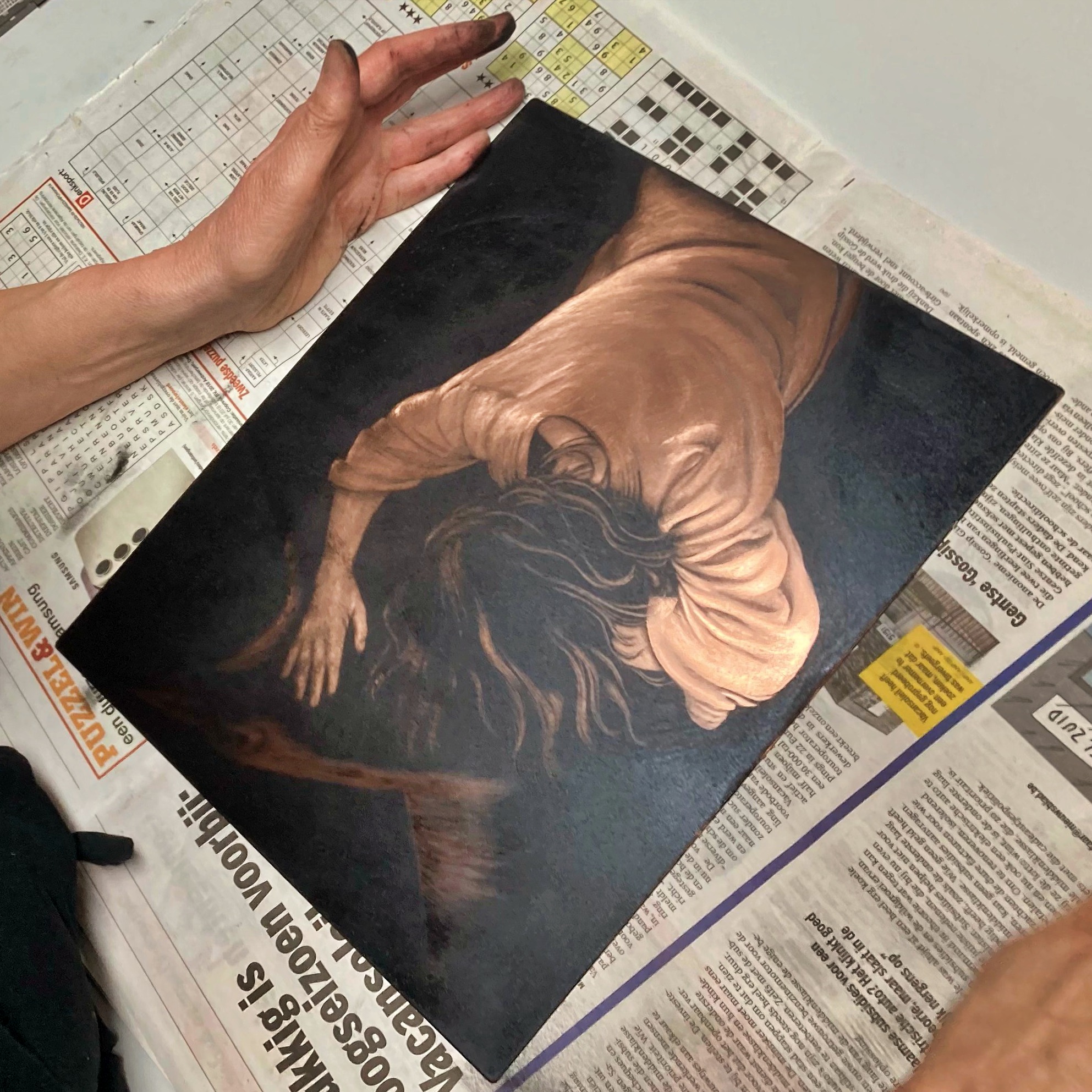
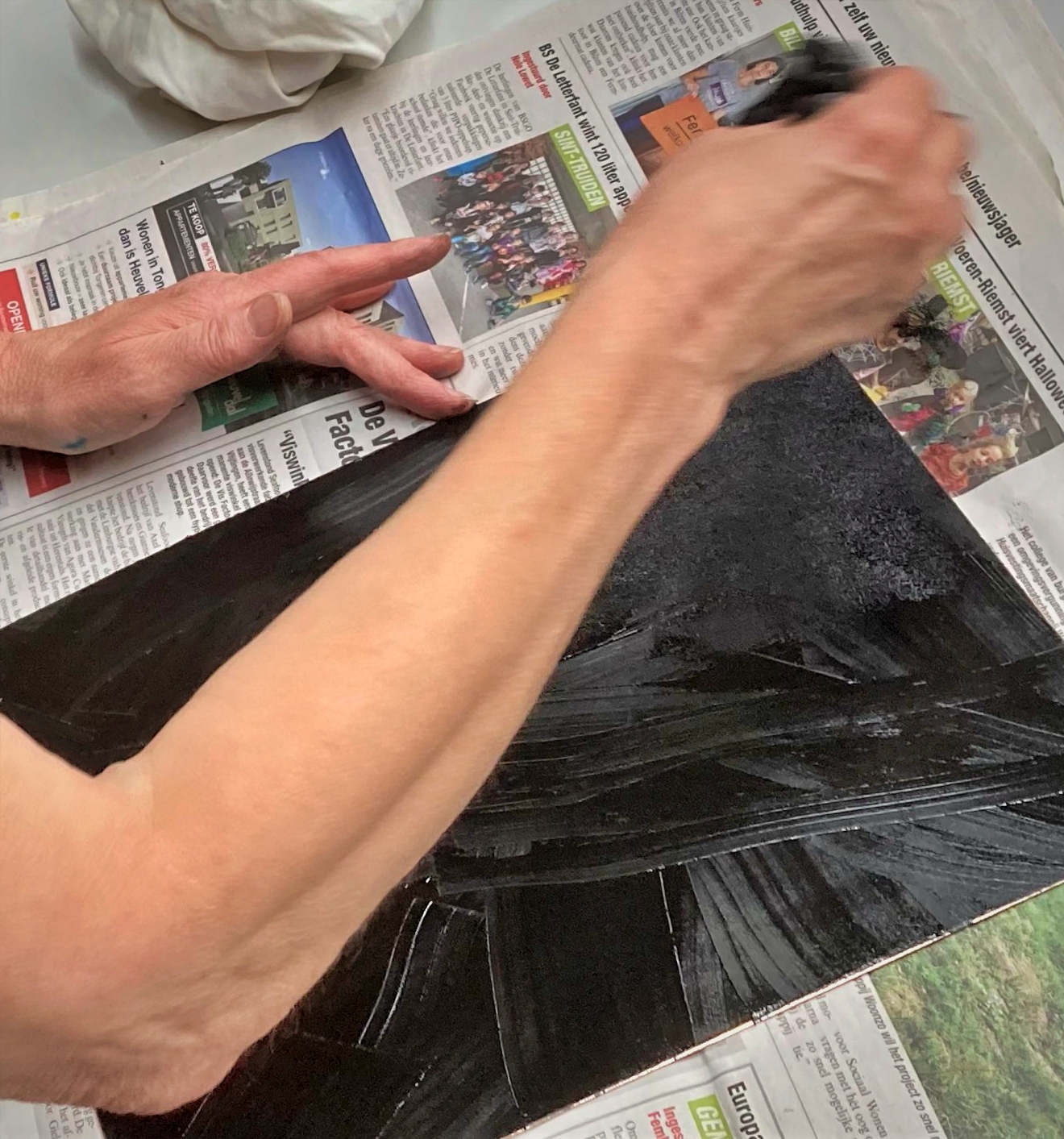
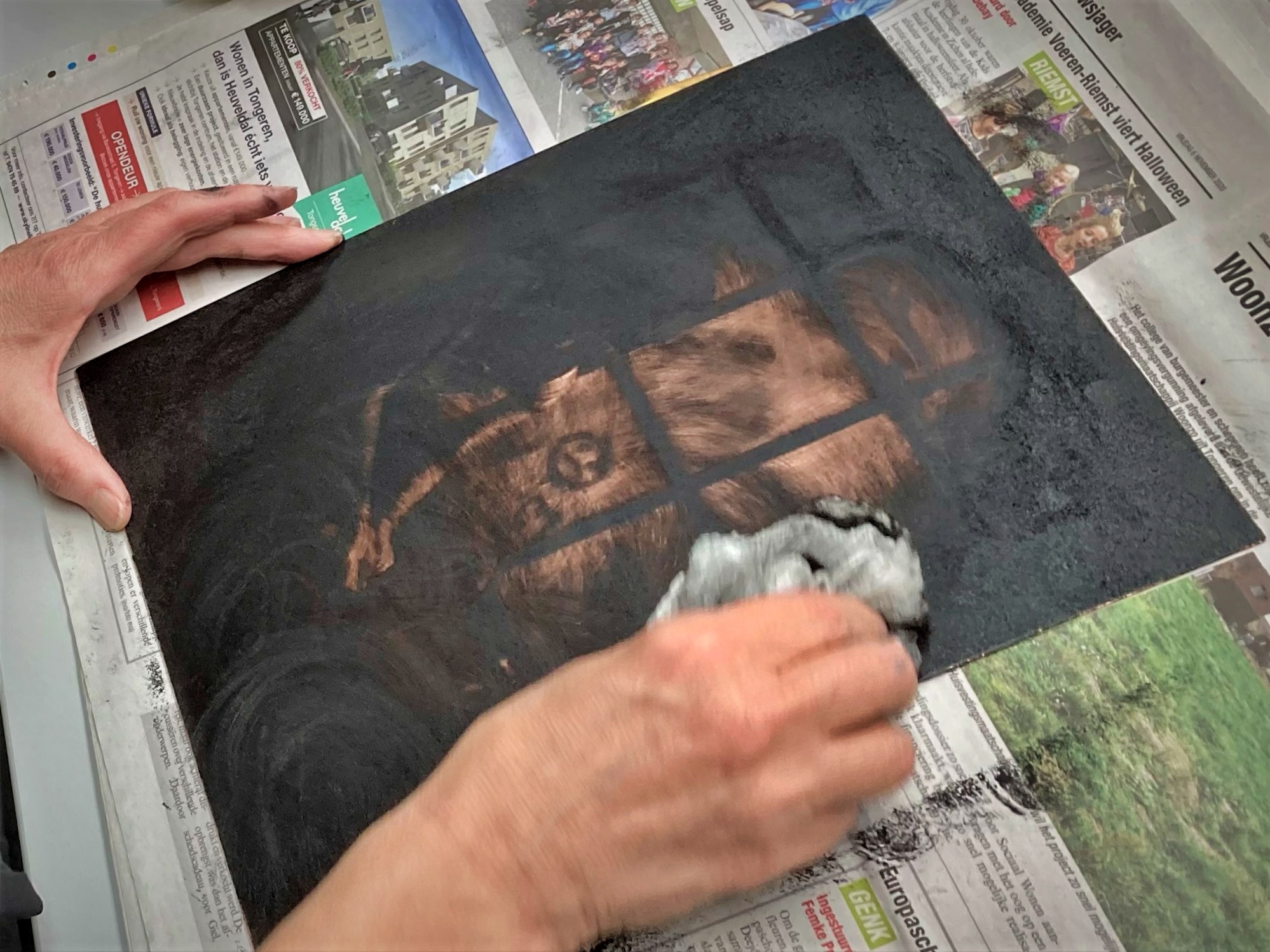
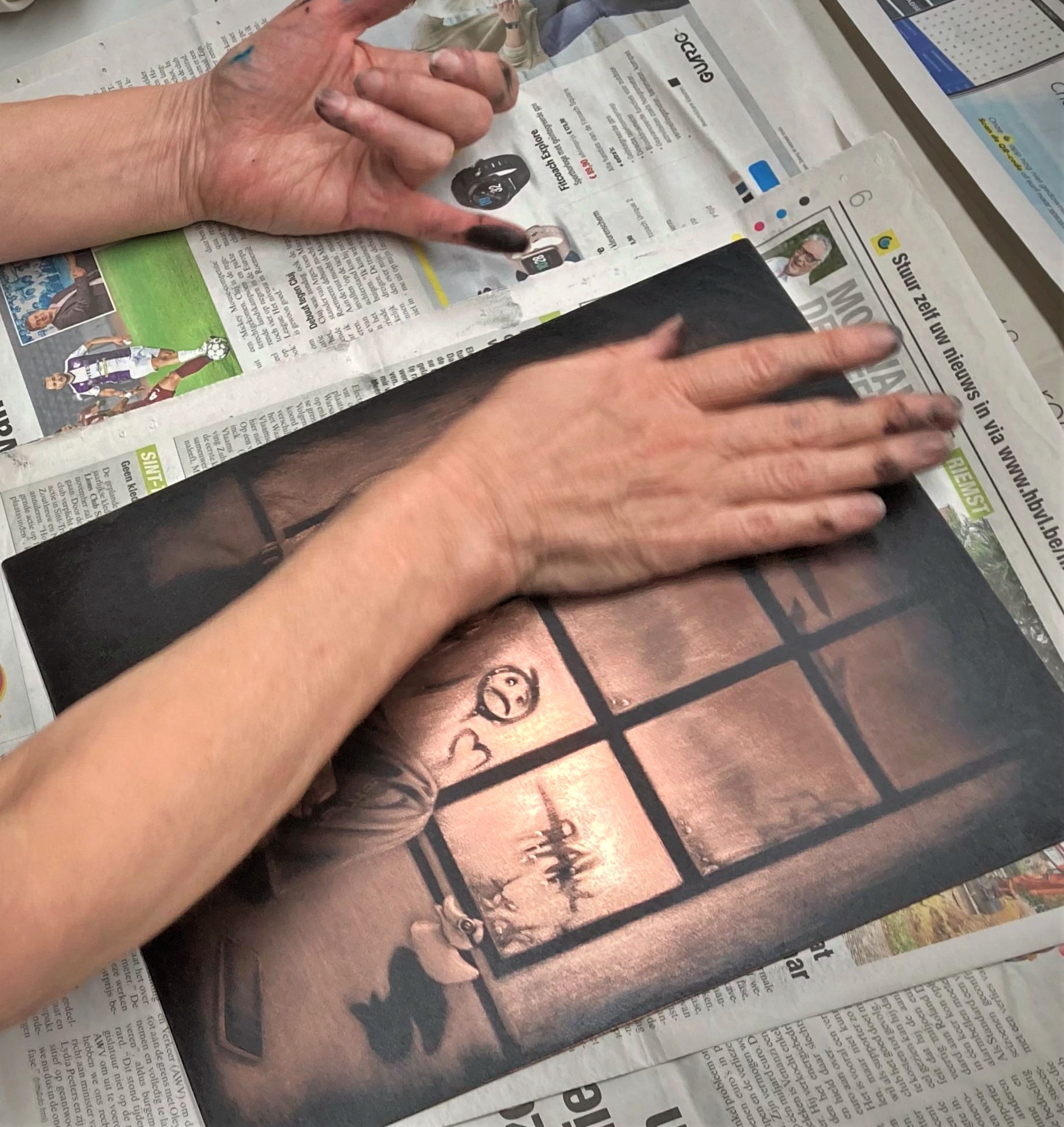
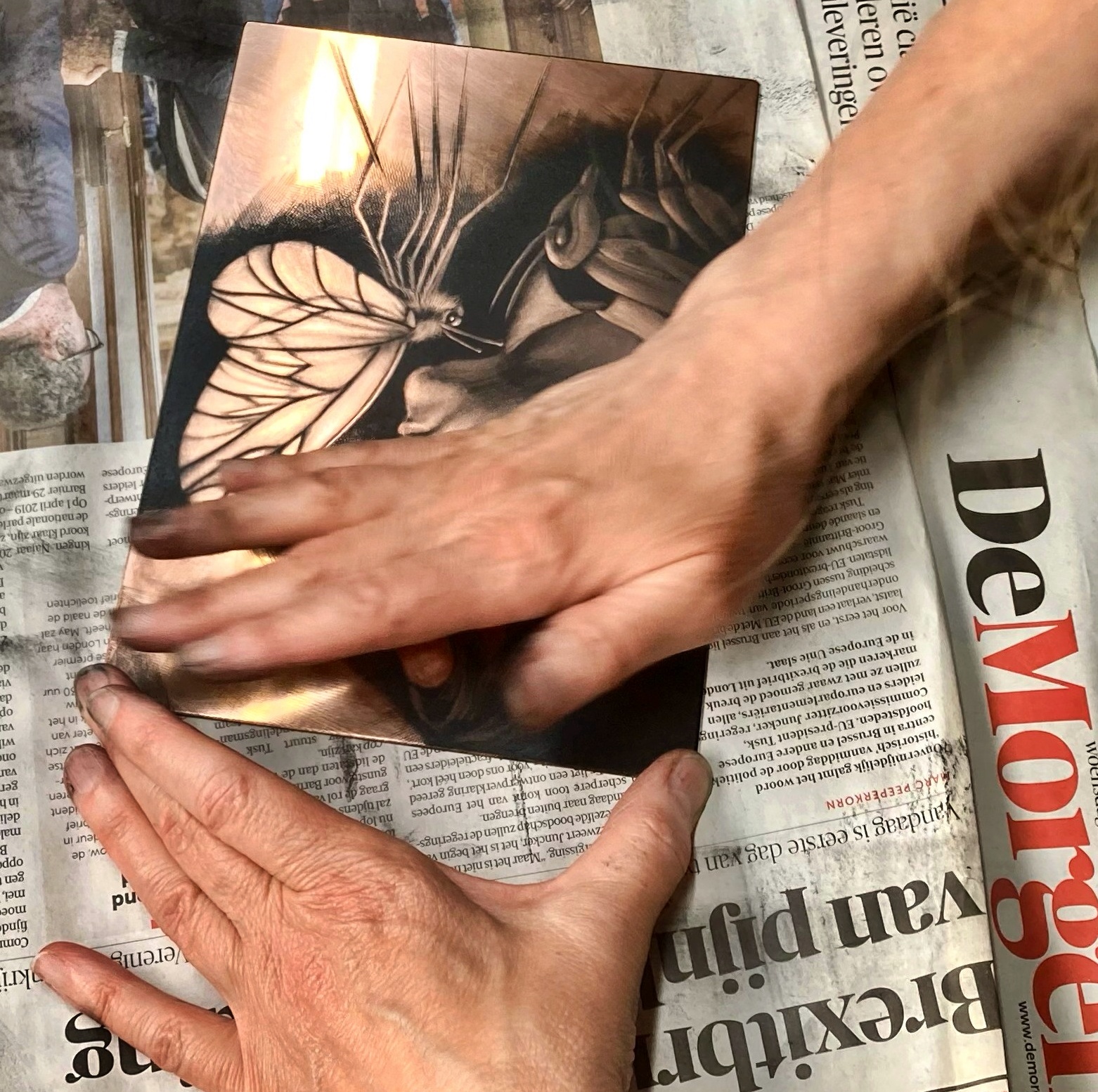
After you have prepared (mixing and diluting) the Charbonnel Intaglio copper print ink you must cover the plate completely with ink. Immediately afterwards rub off the ink with paper and tarlatan. Then teeing off the plate with your bare hand, then the plate is ready to be printed.
The art of inking & wiping by hand
When it comes to the ink used for mezzotint printing, the consistency and quality of the ink are critical to achieving the desired results. Mezzotint artists often use soft, tacky inks that have a sticky consistency, which helps them adhere to the rough surface of the plate. Etching inks, particularly those designed for aquatint techniques, are commonly chosen due to their ideal viscosity and ability to sit in the recessed areas of the plate without overpowering the lighter regions. Some artists may also choose to modify the ink with plate oil, which adjusts its thickness and flow, allowing for a smoother application that can better fill the fine texture of the plate.

Once the plate is properly inked, it must be wiped clean to remove the excess ink. This is a delicate and meticulous process, as the artist must carefully leave ink only in the recessed areas of the plate, where it will be transferred to the paper during printing. The wiping process is often done using a cloth called tarlatan, a thin cotton fabric that helps absorb the excess ink without disturbing the delicate tonal values already established on the plate. The artist's skill and control during this step are essential for preserving the tonal nuances created in earlier stages of the process.


The Printing Process.
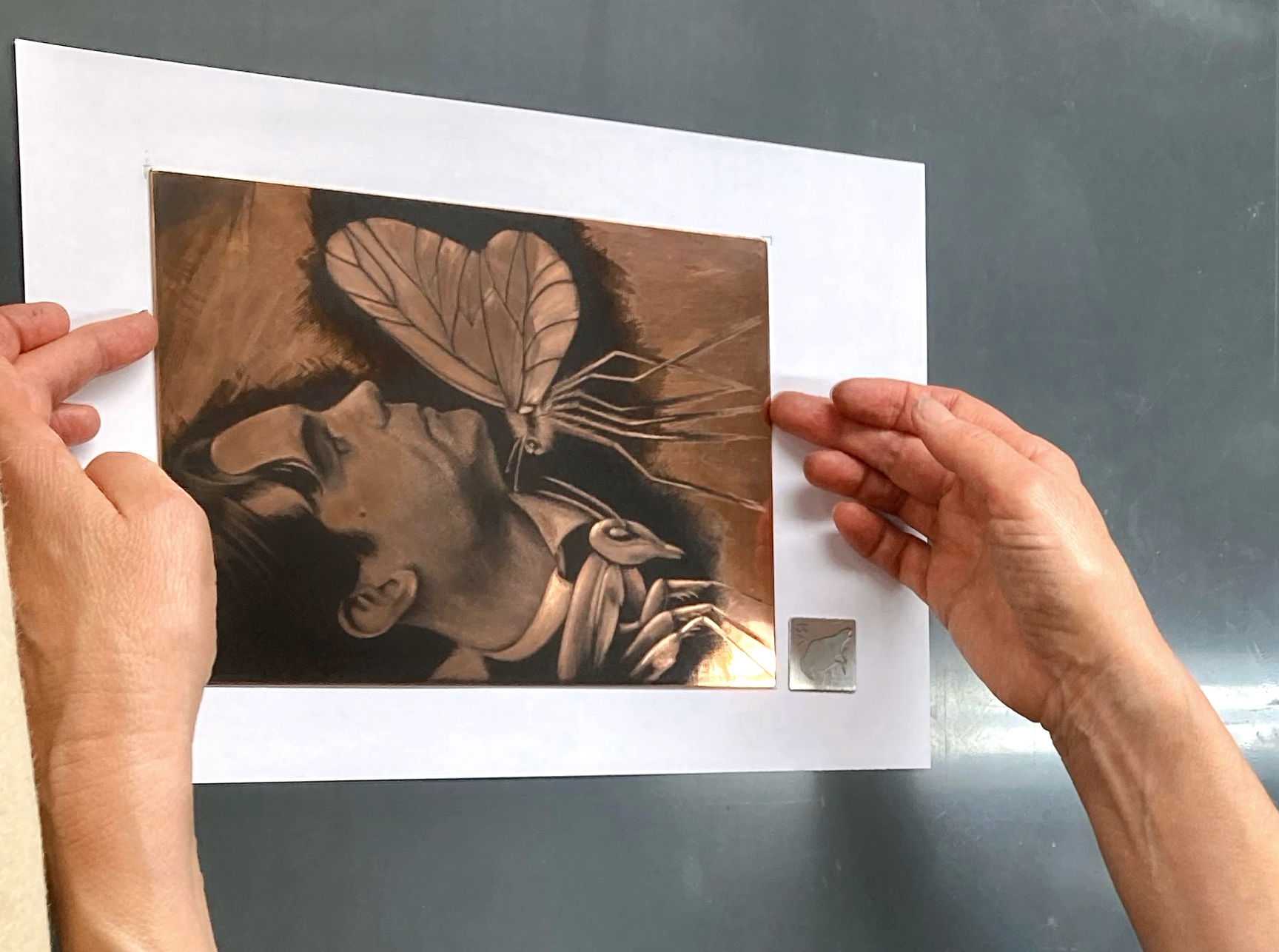
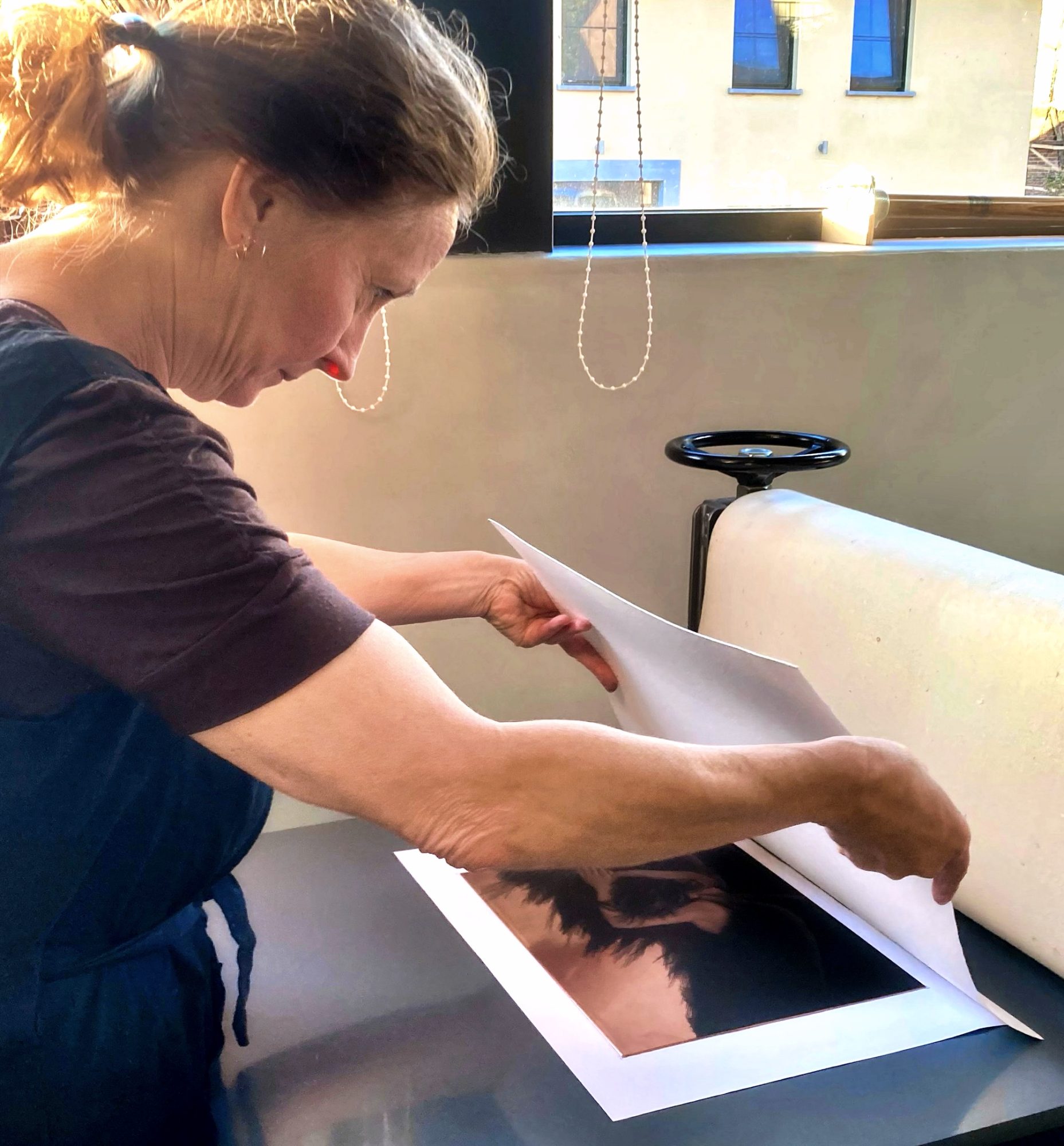
Cut all the printing paper (HAHNEMÜHLE copper print paper) to size in advance and place it in lukewarm water for 1 hour. Place the ink plate on the fitting sheet on the press plate, roll a sheet between 2 towels dry and place it on the ink plate. After one to three printing steps, let the print ventilate for 1 hour. Then let the prints rest between 2 wooden plates for a few days, ventilate for another 1 hour and then let dry for a week between 2 wooden plates with a weight on it.
Mastering the etching press & editioning
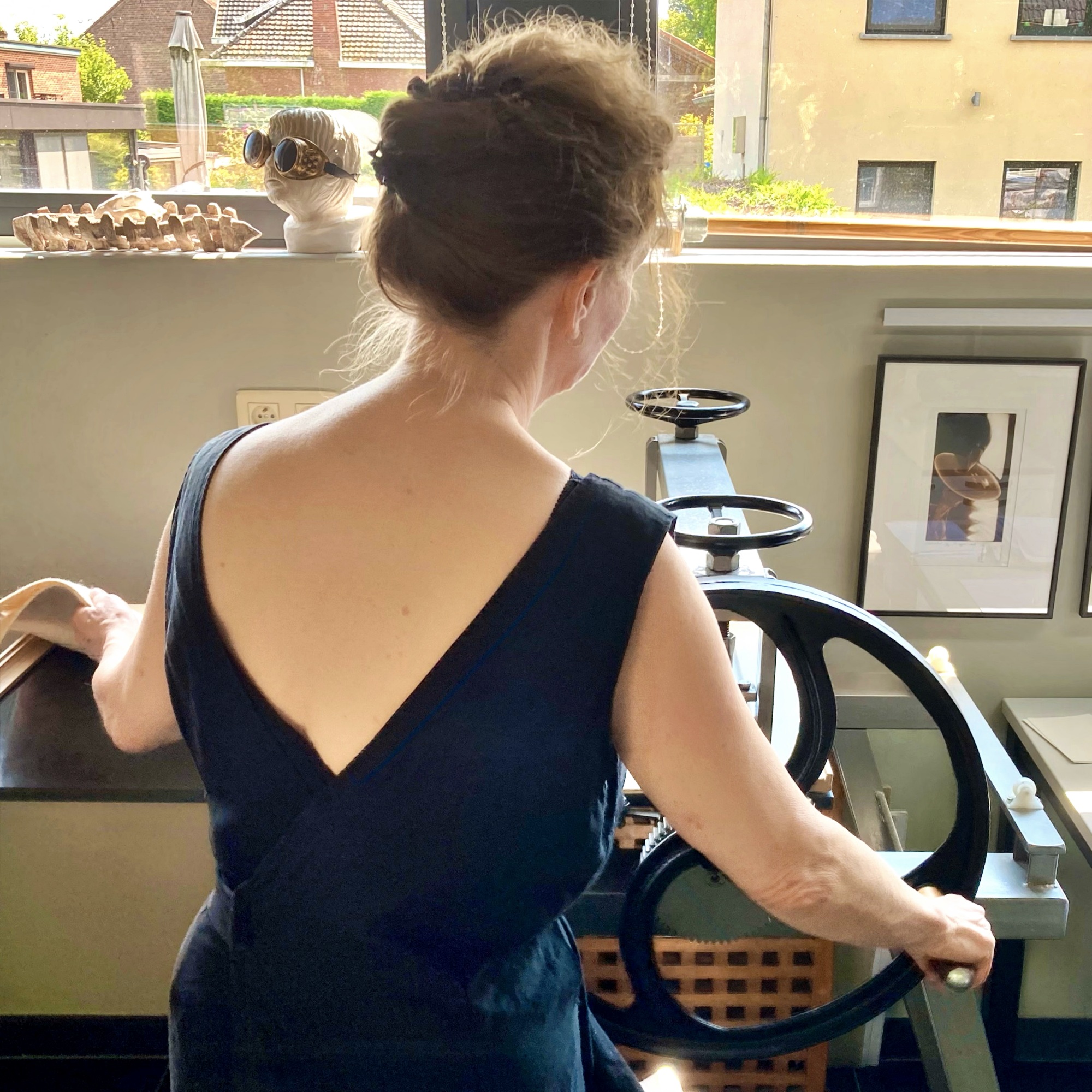
After the plate has been prepared and inked, the next step is to print the image. Mezzotint printing requires a press that can exert a high level of pressure, ensuring that the ink makes full contact with the paper to create a clear, sharp print. The plate must be placed carefully on the press, and the paper must be positioned over it. It is customary to dampen the paper before printing, as this helps it to better absorb the ink and ensures an even transfer from the plate.

The choice of paper used for mezzotint printing is just as important as the other materials in the process. High-quality, thick printmaking papers are preferred for their ability to hold ink and create detailed prints. Papers such as Somerset or Hahnemühle are commonly used in mezzotint work, as they have a smooth, durable texture that allows the ink to sit comfortably on the surface and transfer evenly. The dampened paper also ensures that the fine details of the mezzotint process are preserved in the final print. The level of dampness must be carefully controlled, as too much moisture can cause the paper to stretch and distort, while too little will result in a weaker transfer.

Once the plate and paper are in place, the press is operated, and the pressure is applied. The high pressure is necessary to ensure that the ink from the plate is transferred clearly to the paper, producing a crisp, fine detail in the final print. After the print has been pressed, it is carefully removed and left to dry. The drying process can take several days, as the ink must fully cure and the paper must be allowed to settle into its final shape.

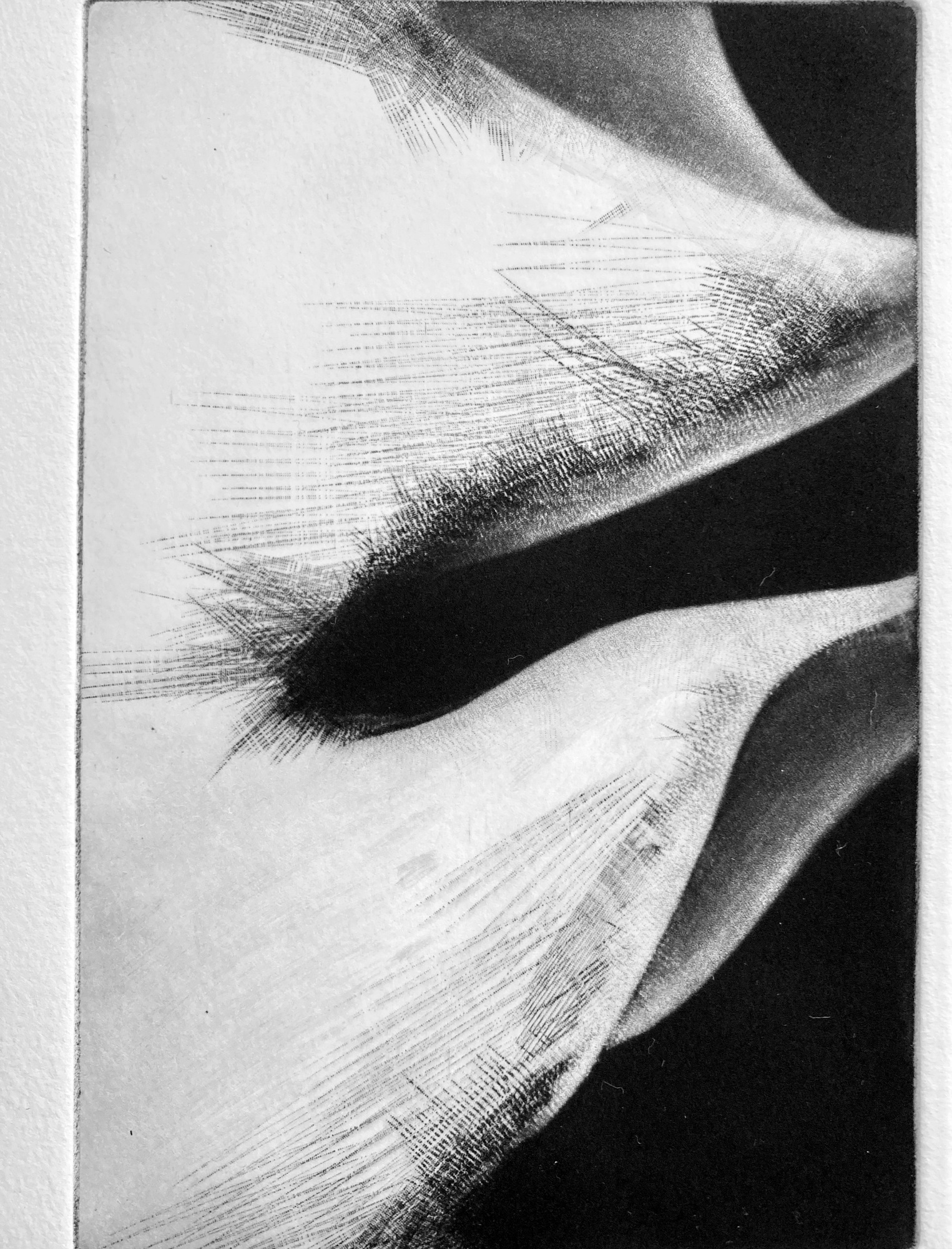
The final product of mezzotint printing is a work of art that showcases the artist's mastery of the medium. The tonal variations created through the careful use of the mezzotint rocker, scrapers, and burnishers result in a print with deep, rich shadows and soft, delicate highlights. The texture of the print is unique, with areas of smooth, velvety darkness juxtaposed against areas of fine detail and light. Mezzotint prints are known for their ability to convey a sense of depth and volume, giving the image a three-dimensional quality that is difficult to achieve with other printmaking techniques.

While mezzotint printing can be a time-consuming and labor-intensive process, the results are often stunning and highly prized by collectors and art enthusiasts alike. The richness of the tonal range, the textural depth, and the unique qualities of each print make mezzotint a highly respected technique in the world of printmaking. Whether using traditional copper plates or modern aluminum, the tools, materials, and careful techniques employed in mezzotint printing allow artists to create intricate, detailed works of art that continue to captivate viewers around the world.